6 November 2026
Improving DRC-rich Latex Yield and Reducing Disease Incidence in Rubber Trees through Agrohomoeopathic Treatment: Insights from Kerala
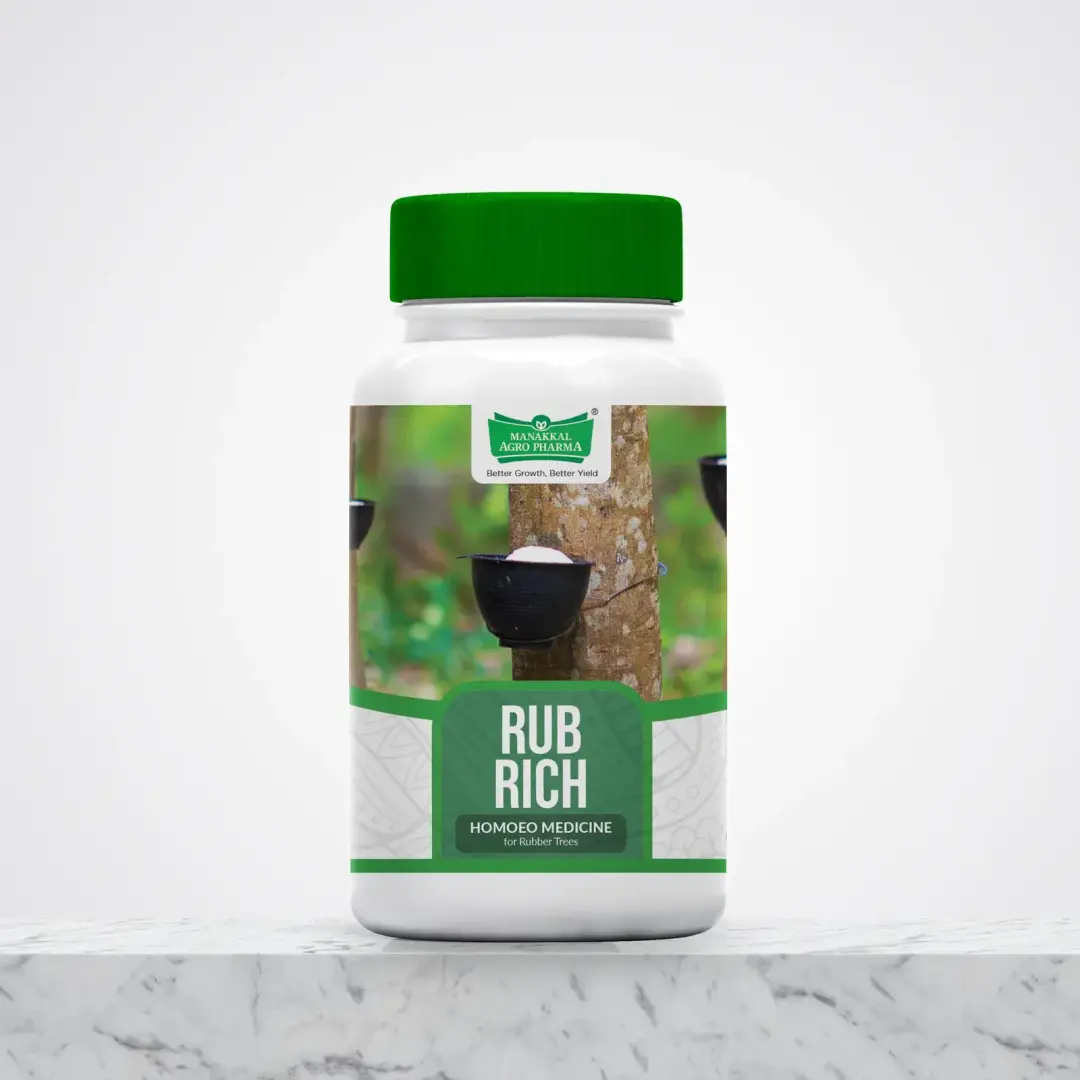
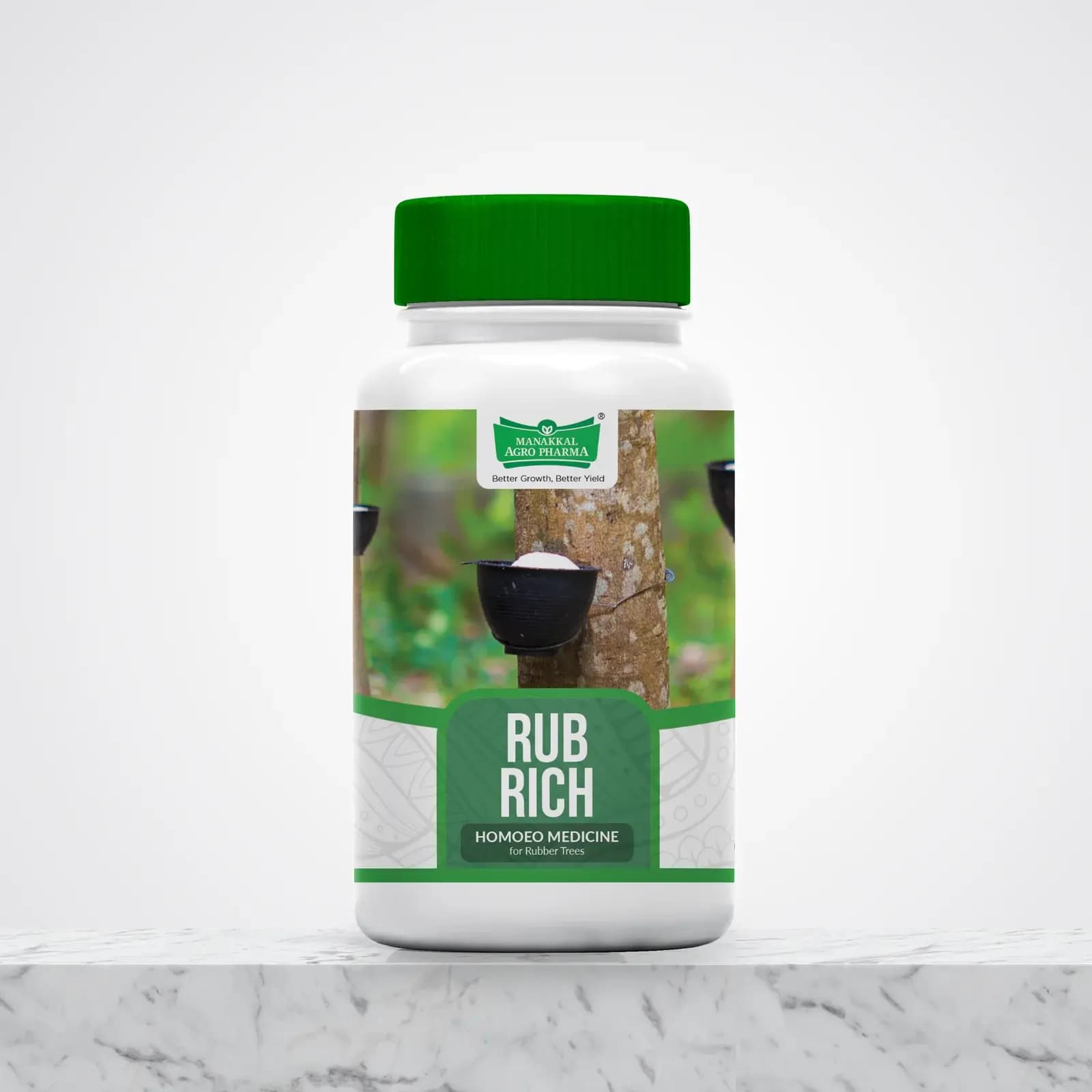
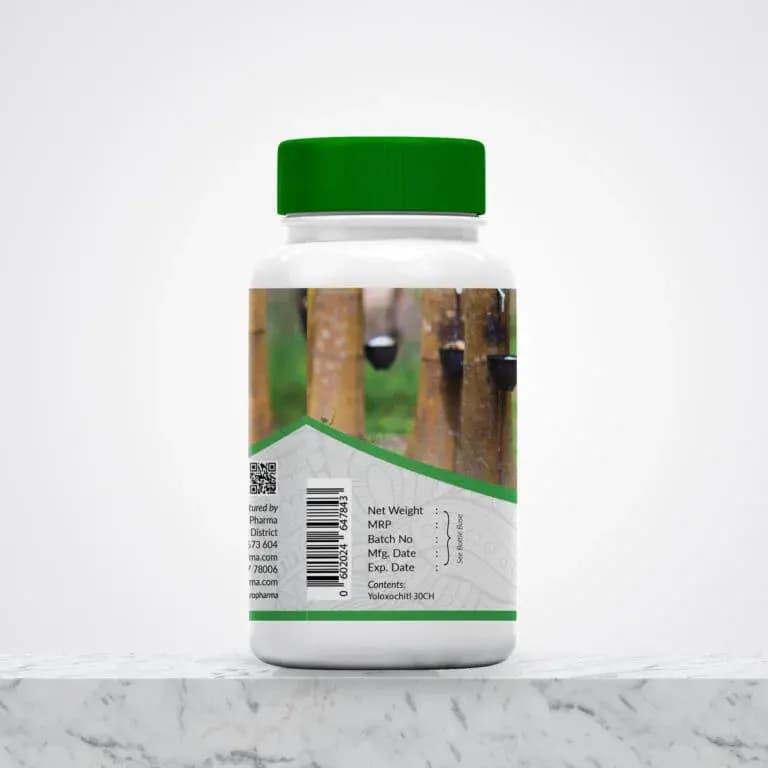
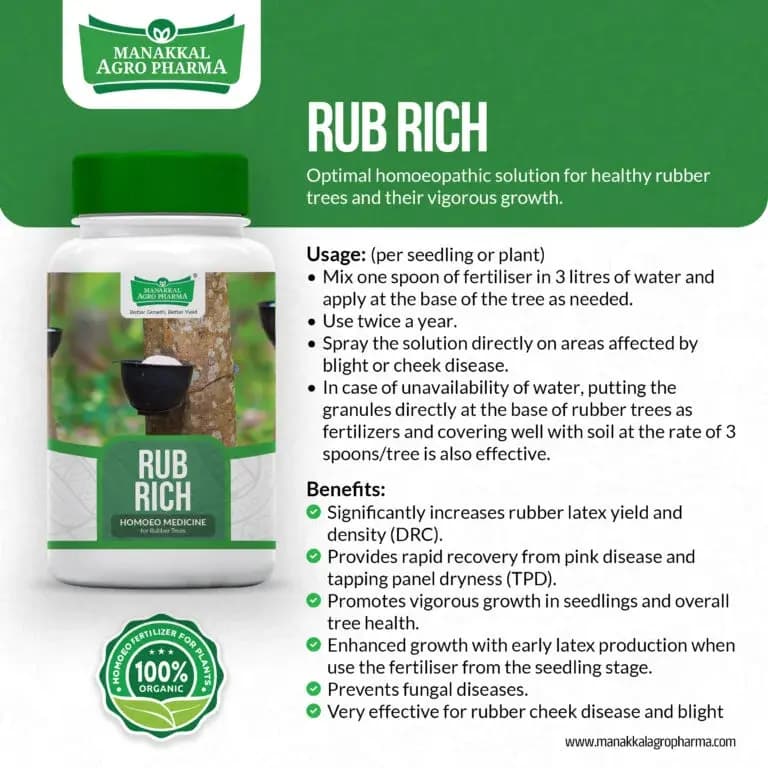
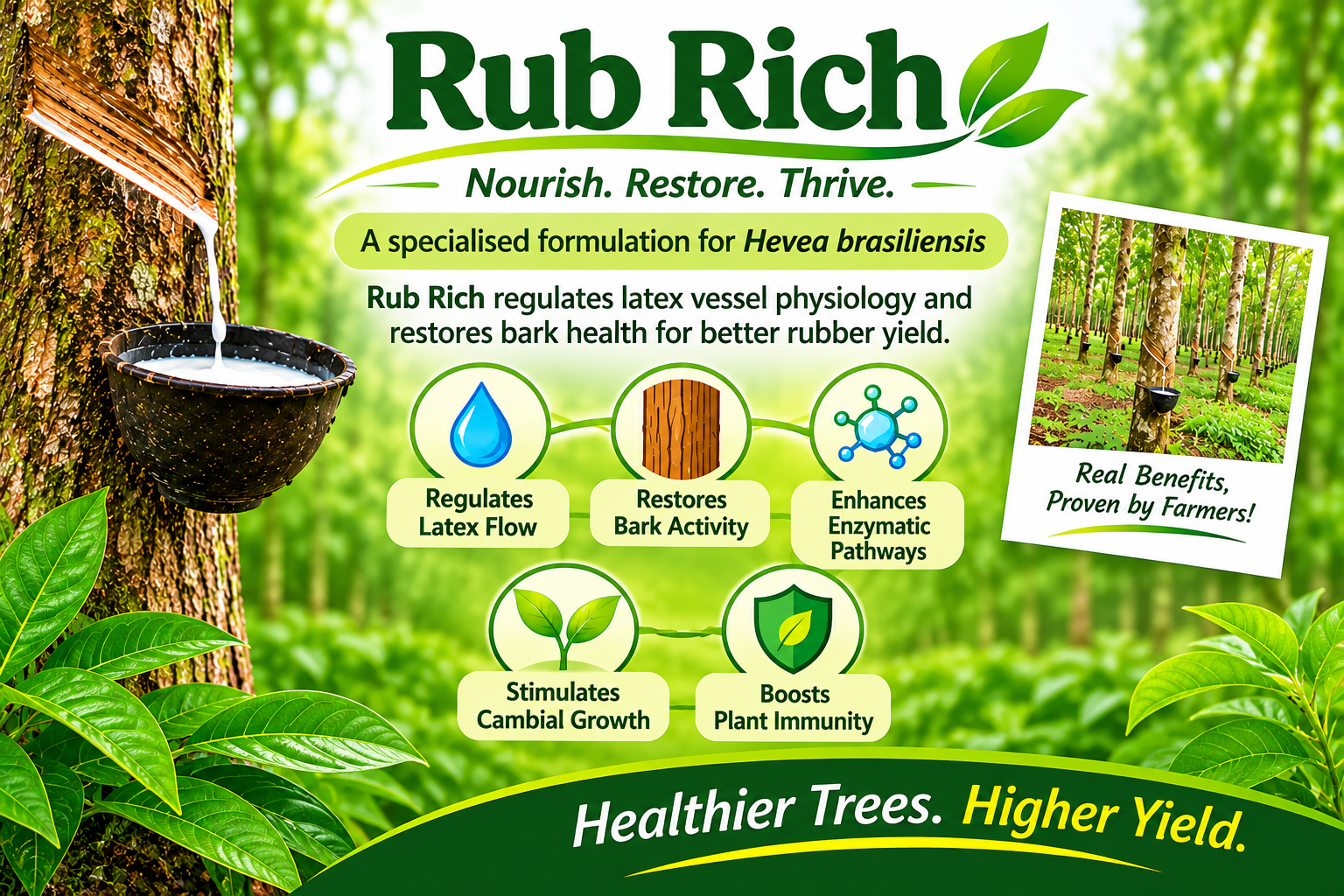
Rub Rich – Nourish. Restore. Thrive.
Declining soil health, disease recurrence and rising cultivation costs have placed Kerala’s rubber growers under increasing strain. Chronic disorders such as tapping panel dryness (TPD), brown bast, bark canker, leaf diseases and reduced latex purity (low DRC) have intensified yield losses across smallholder plantations. The agrohomoeopathic formulation Rub Rich has recently been adopted by farmers as a low-cost, non-toxic alternative to chemical treatment. This study compiles field evidence from multiple growers across Kerala to assess its performance in improving latex flow, reducing disease incidence and restoring plant vitality. Across all sites, Rub Rich consistently contributed to reduced bark dryness, improved DRC, lower incidence of pink disease and leaf problems, and an increase of 15–100% in latex output depending on baseline condition. These results suggest that agrohomoeopathic stimulation may enhance physiological functioning, metabolic balance and defence responses in rubber trees, meriting further controlled research.
Introduction
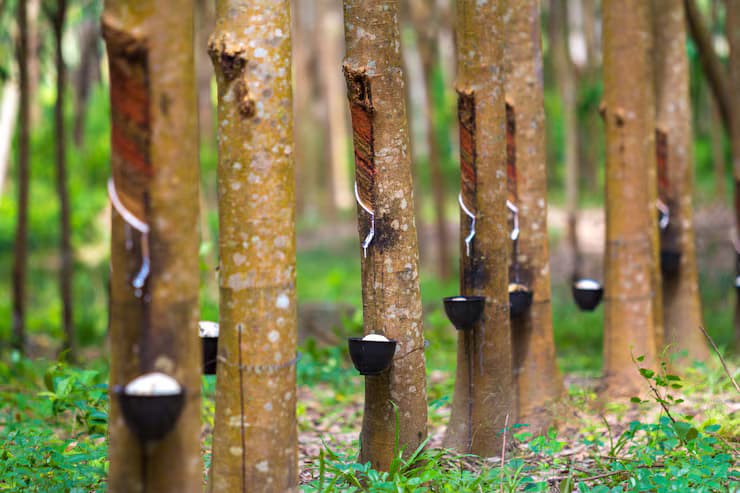
India’s primary rubber-growing state, Kerala has undergone structural challenges in rubber tree cultivation over the last decade. Falling market prices, high labour expenditure for tapping, declining soil fertility and recurring tree disorders have forced many growers to abandon or scale down plantation management. Diseases such as tapping panel dryness (TPD), brown bast, bark canker, pink disease (Corticium salmonicolor), leaf fall disorders and nutrient-stress-induced latex reduction are widespread among both smallholders and medium plantations. Chemical fertilisers and fungicides, though extensively used, have offered inconsistent relief and contributed to soil imbalance, microbial depletion and poor long-term tree resilience.
Agrohomoeopathy offers a contrasting approach, focusing on metabolic activation and defence strengthening rather than chemical suppression. Rub Rich is a formulation designed specifically for Hevea brasiliensis—aims to regulate latex vessel physiology, restore bark tissue activity, enhance enzymatic pathways, stimulate new cambial growth and improve overall plant immunity. This study compiles real-world experiences from farmers and tappers across Kannur, Kottayam, Kollam and Alappuzha to evaluate the practical benefits of this method.
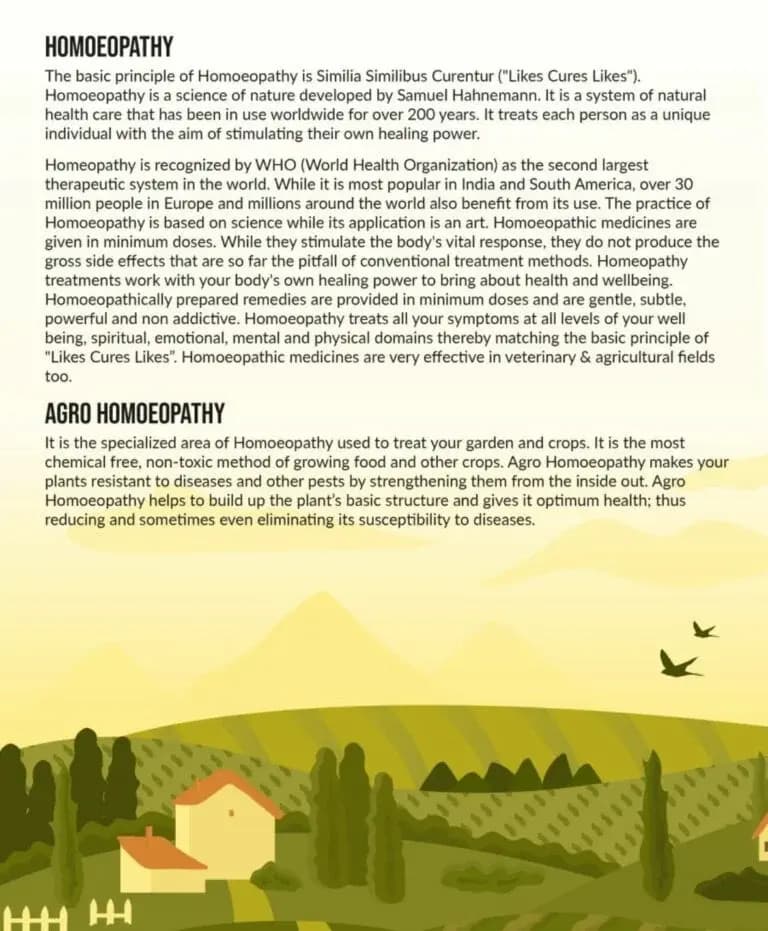
Agrohomoeopathy
Agrohomoeopathy, a specialised branch of homoeopathy, represents one of the most innovative approaches in contemporary agricultural research. It applies homoeopathic principles to crop cultivation, focusing on strengthening the plant itself rather than merely combating pests or pathogens. Rooted in the idea that disease arises when the organism’s vital force is disturbed, agrohomoeopathy seeks to restore balance by addressing the underlying cause of plant disease, as expressed through observable symptoms.
Unlike pesticides or fungicides, which often drive microorganisms to develop resistance and trigger new outbreaks, homoeopathic remedies operate on an entirely different principle. Applied in ultra-dilute forms, they do not act as toxic antagonists to pests or pathogens. Instead, the plant absorbs the energetic signature of the remedy, which harmonises with its own vitality and strengthens its innate defence mechanisms. In this way, agrohomoeopathy empowers the plant to resist diseases and pests, without external chemical assault.
Methods of the Study
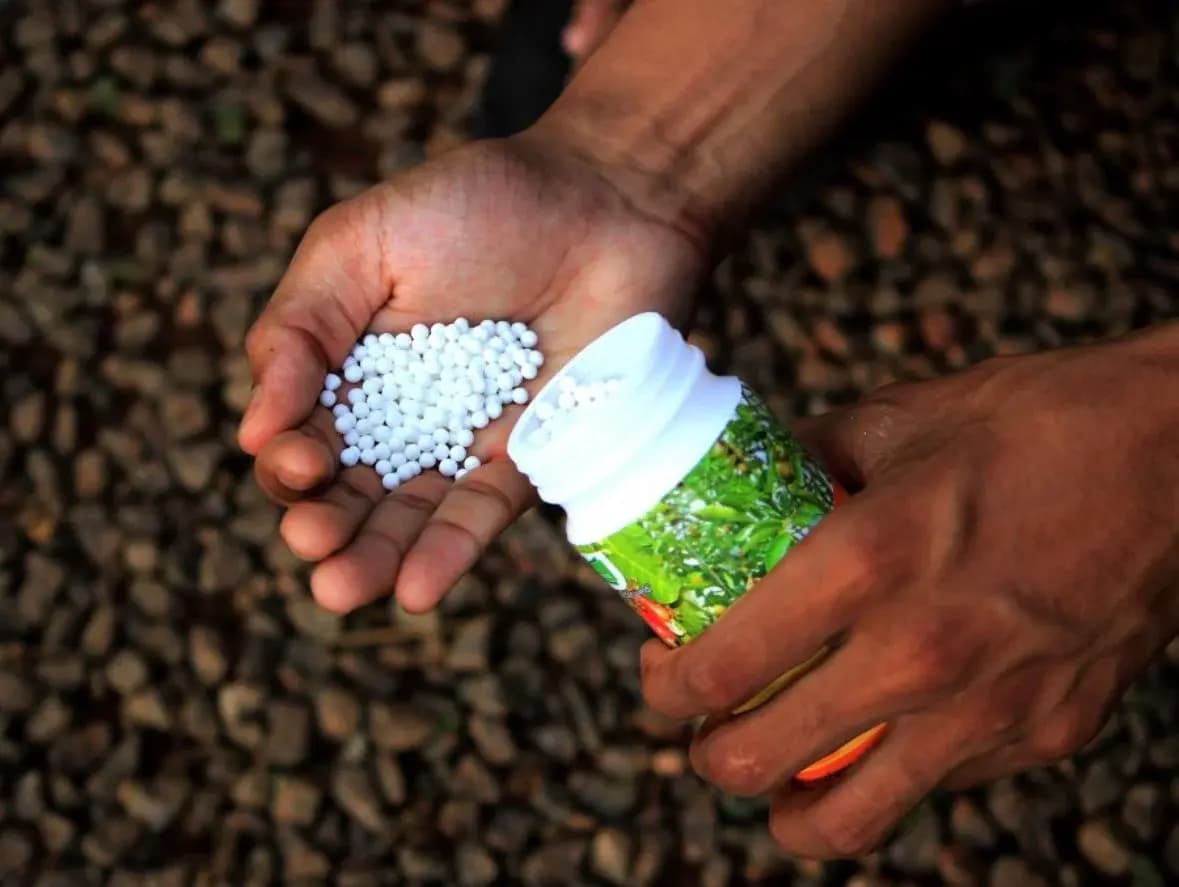
Farmers adopted Rub Rich independently across plantations varying from 50 to 500 trees, and all followed a broadly consistent application method in their regular management cycles. The remedy was prepared by dissolving one bottle in water sufficient for approximately sixty trees and was applied through basal drenching near the root zone. Most farmers repeated the treatment once every three to four months, adjusting the frequency according to disease severity, seasonal stress and the demands of the tapping cycle. Observations during the study focused on key indicators of tree health and latex productivity, including the degree of bark dryness and recovery from brown bast, the flow and continuity of latex during tapping and the number of tapping days that could be sustained without interruption. Additional parameters such as changes in dry rubber content, reduction in bark canker or pink disease, improvements in leaf fall and foliage density and the overall vigour of the trees were also carefully monitored. Documentation relied on farmer testimonies, videographic records and routine observations made during tapping, which together provided a consistent picture of the trees’ responses to Rub Rich across different agro-ecological conditions.
Findings and Inferences
Across all sites, Rub Rich produced consistent improvement in latex flow and disease reduction.
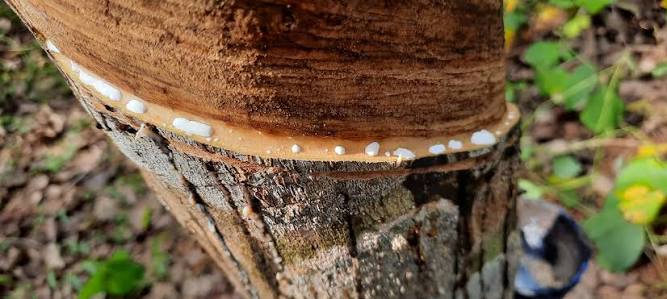
Thankachan from Thabor, Kannur—managing 500 rubber trees in a traditional mixed-farming landscape—reported significant recovery from bark dryness (brown bast) and bark canker (locally cheek disease), both of which previously caused severe latex reduction. Within one year of use, latex sheet production increased by 15–20 per cent and dryness in the tapping panel visibly subsided.
Jaison from Alakkod, a former tapper turned plantation owner, experienced chronic tapping panel dryness that caused latex flow to stop abruptly. After applying Rub Rich, latex output became steady, surpassing levels achieved in the last twelve years. He emphasised the economic value of one bottle serving 60 trees, making it highly cost-efficient.
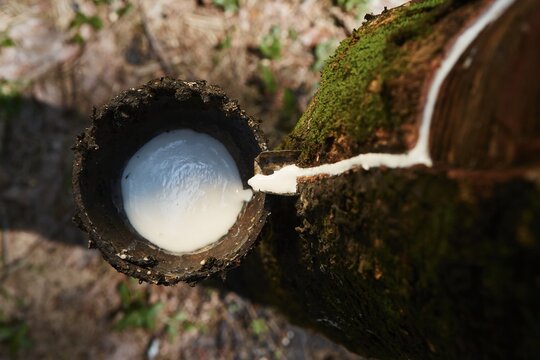
Jose from Chembanthotty, Kannur, observed that recurring dryness disappeared within four months of application and tapping yielded full flow without interruptions. Reports of low DRC improved substantially, with richer white latex replacing watery drips.
Fr. Michael Kizhakkeparambil, from St Antony’s (The Abbot) Church, Pala, Kottayam, manages extensive cultivation around the church premises, including coconut palms, pepper vines, rubber trees, plantain, areca-nut palms, and seasonal vegetables. The rubber trees recorded an increase in latex flow, after Rub Rich were applied as directed.
In Mundakkayam, Kottayam, Sathyan—a retired Forest Department employee managing 300–350 trees, recorded notable reduction in leaf fall, better bark health and an increase in DRC compared to past tapping seasons. Despite avoiding chemical fertilisers entirely, he achieved higher yield, and overall cultivation costs reduced by nearly 50%.
Sabu from Odanavattom, Kollam, who had seven years of tapping experience, used Rub Rich regularly for one year. He observed the cessation of dryness disorders and a doubling of latex yield—from 5–6 kg per tapping session to nearly 10 kg.
Similarly, Vasudevan (Mundakkayam), a Police Sub-Inspector, reported that bark canker—once widespread across all 50 trees—reduced to only two or three minor cases within four years of using Rub Rich. This season, no canker symptoms appeared.
The benefits extended beyond rubber alone. Preethi Ravindran from Kattanam, Alappuzha, found that both her rubber trees and intercropped coconuts showed renewed vigour, higher DRC, improved sheet quality and significant recovery from earlier decline after long years away from farming.
Together, these observations indicate that Rub Rich facilitates:
Improved latex vessel functioning
Reactivation of blocked laticifer systems
Enhanced cambial tissue regeneration
Improved enzymatic activity within bark layers
Higher immunity against fungal pathogens
Better root uptake and metabolic balance
Discussion
The aggregated field data suggest that agrohomoeopathic remedy helps counteract chronic physiological disorders in rubber such as TPD, brown bast and bark canker, which are traditionally difficult and expensive to manage using conventional methods. The observed improvements in DRC, latex continuity and disease suppression indicate that Rub Rich may influence internal plant mechanisms—possibly through biochemical signalling, enzymatic activation or enhanced defence mechanism. The affordability and labour-free nature of application also make it attractive for smallholder farmers who face rising input costs and fluctuating market prices.
These findings are particularly significant given Kerala’s widespread challenges with tapping panel dryness, declining estate productivity and climate-induced stress. The consistent field-level recovery reported across varied agro-climatic conditions highlights the potential of agrohomoeopathy as a sustainable alternative.
Conclusion
The agrohomoeopathic formulation Rub Rich demonstrates promising potential in managing major rubber tree diseases and improving latex productivity across Kerala’s smallholder plantations. By addressing chronic problems such as tapping panel dryness, bark canker and low DRC, while simultaneously enhancing vigour and resilience, the remedy represents a cost-effective and sustainable approach to plantation care. Field-level evidence strongly indicates its usefulness as a complementary or alternative strategy to chemical-based disease management, warranting deeper scientific evaluation and broader adoption trials.
Buy now : https://manakkalagropharma.com/product/rub-rich