7 November 2026
Floral Stimulation in Non-Flowering Garden Plants: An Agrohomoeopathic Management for Ornamental Plants and Gardens
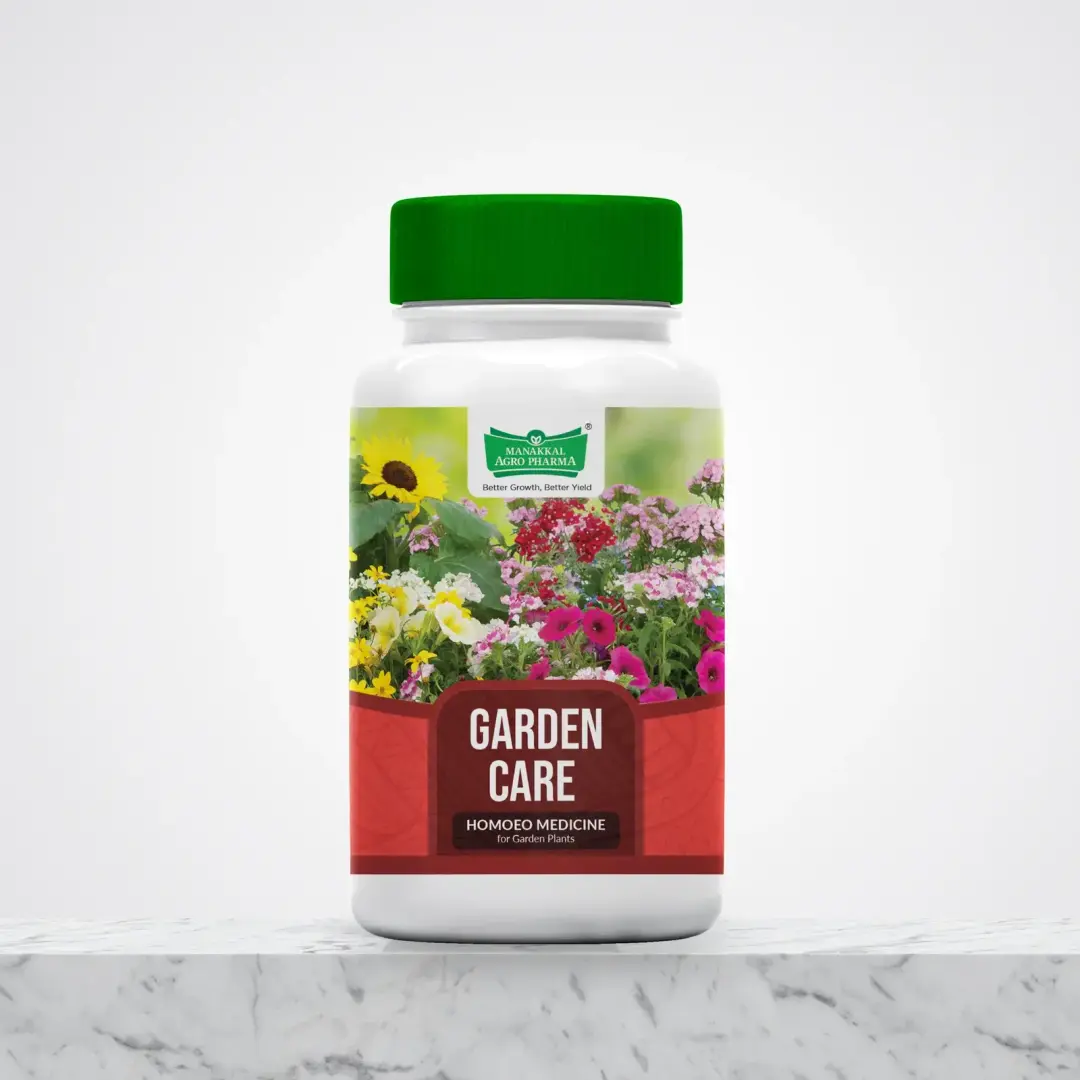
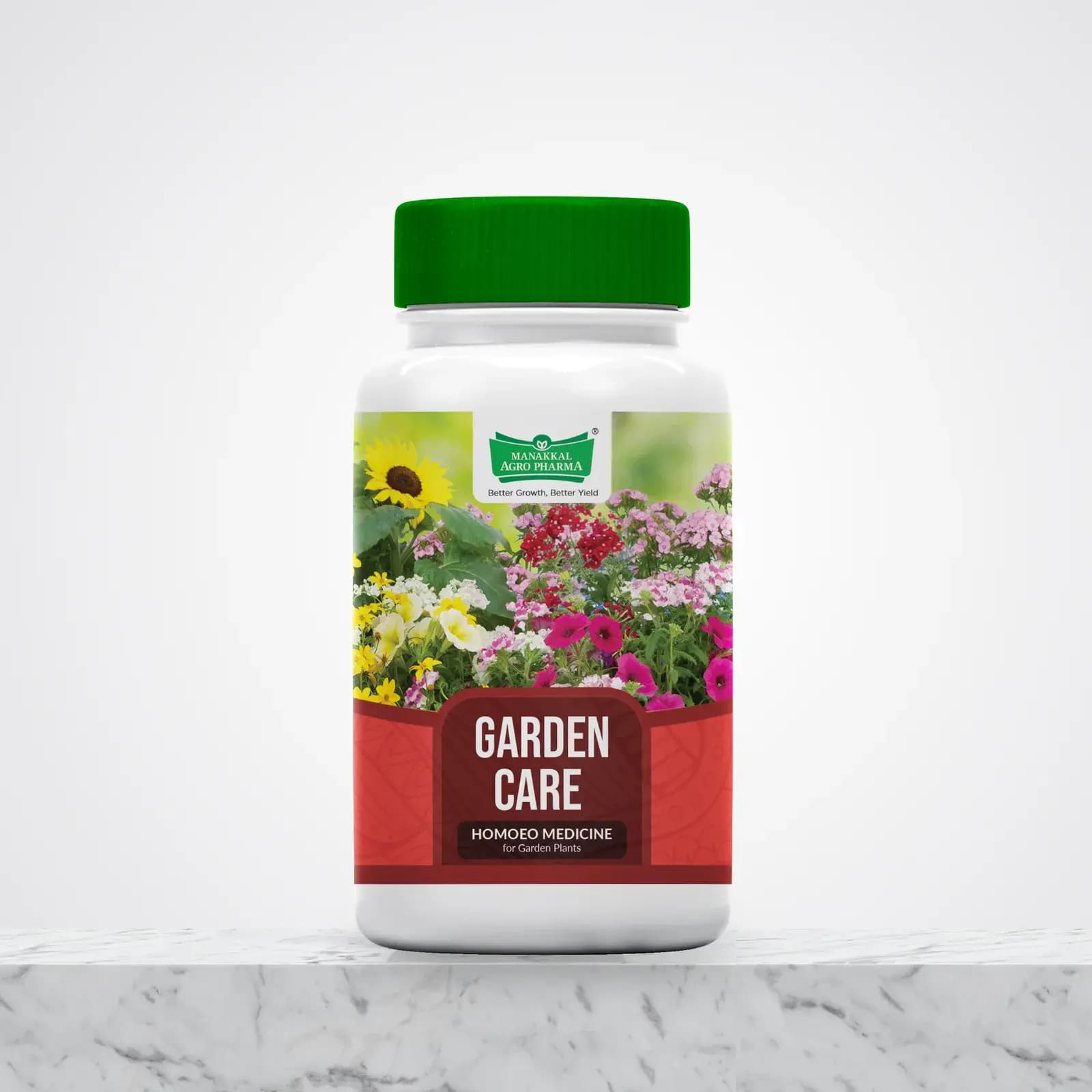
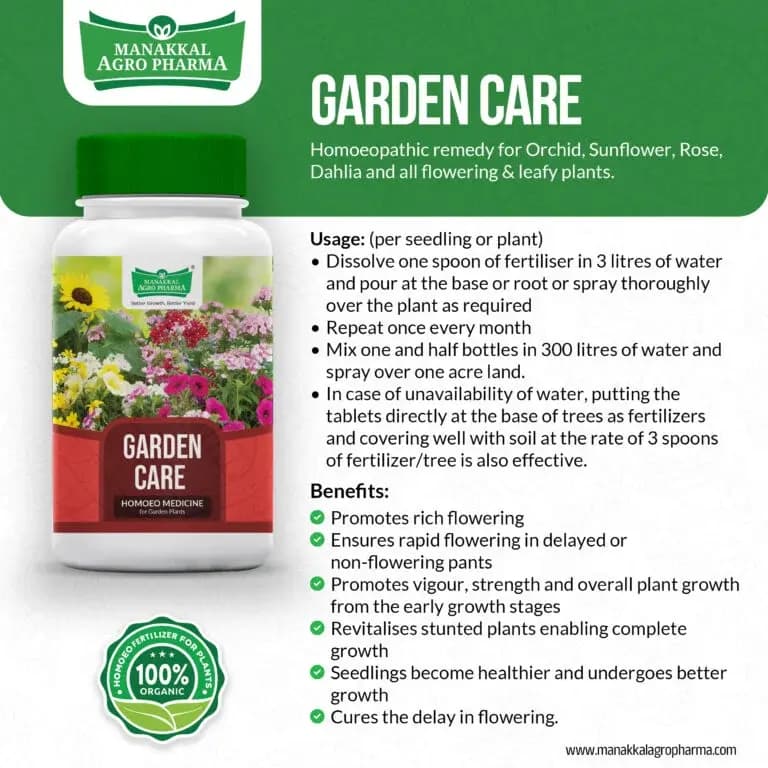
Garden Care stimulates plant growth, enhances vitality, and promotes healthy flowering.
Delayed or absent flowering is a common constraint in household ornamental cultivation, often resulting from physiological stagnation, nutrient imbalance or stress-induced suspension of the reproductive phase. Agrohomoeopathy, a plant-stimulative system using highly diluted bio-regulators, has recently emerged as an alternative for revitalising non-flowering plants. This case study documents the effect of the agrohomoeopathic formulation Garden Care on a non-flowering ornamental plant in a homestead garden in Malappuram, Kerala. Application of the remedy resulted in rapid bud initiation, robust floral emergence and improved vegetative vigour. The findings suggest that agrohomoeopathic bio-stimulation may serve as a low-cost, eco-friendly strategy for managing flowering delays in ornamental species.

Introduction
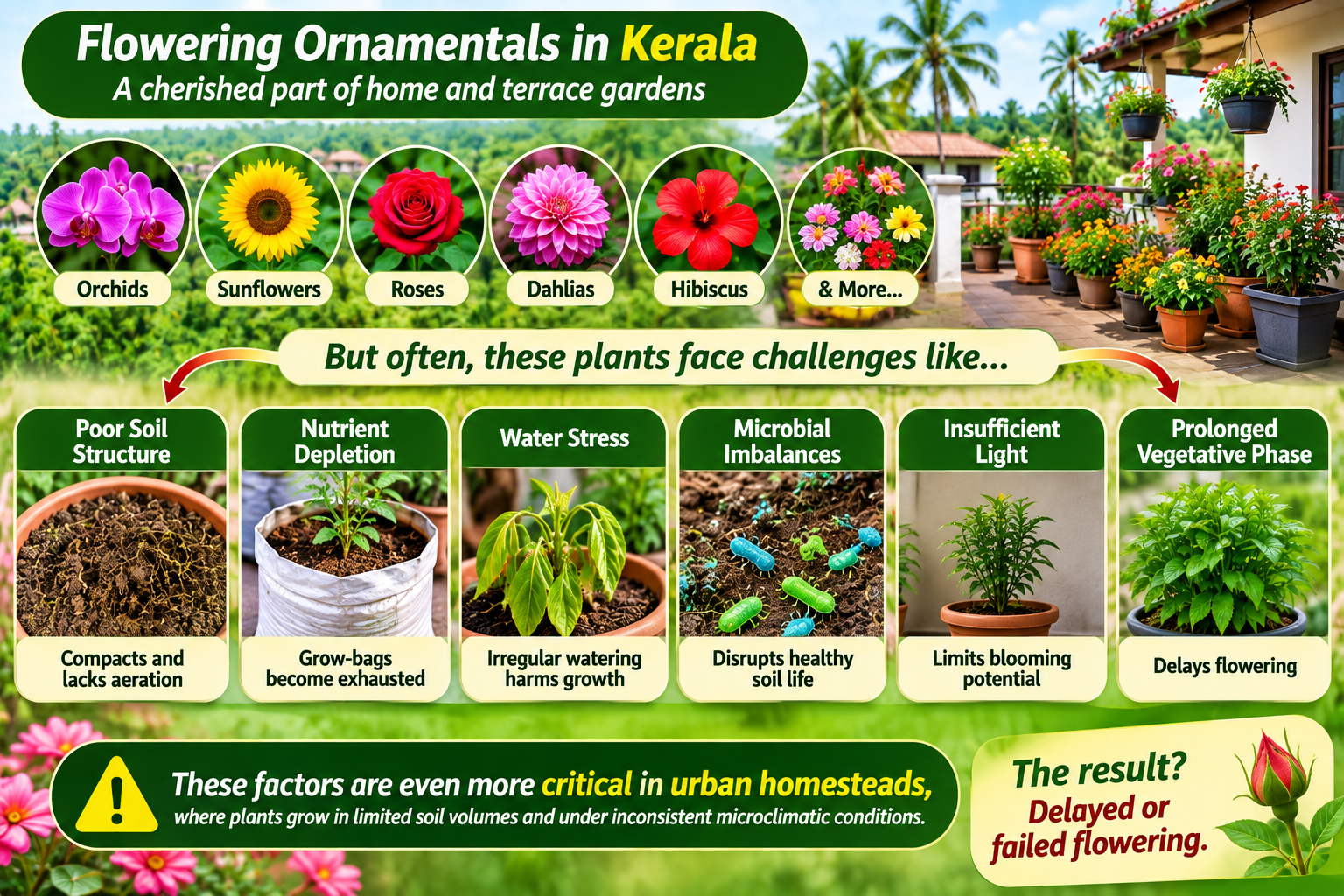
Flowering ornamentals form an integral part of household and terrace gardening in Kerala, where species such as orchids, sunflowers, roses, dahlias, hibiscus and other perennial florals are commonly cultivated. However, poor soil structure, nutrient depletion in grow-bags, water stress, microbial imbalances, insufficient light and prolonged vegetative phase frequently lead to delayed or failed flowering. These limitations are particularly relevant in urban homesteads, where plants are grown in restricted soil volumes and under inconsistent microclimatic conditions.
In this context, agrohomoeopathy has gained attention as an ecological alternative that aims to stimulate plant physiology rather than supply direct chemical inputs. Garden Care, an agrohomoeopathic formulation developed for flowering plants claims to induce metabolic activation, strengthen growth processes and stimulate the shift from vegetative to reproductive development. This study reports a field-based case from Malappuram, offering evidence of the formulation’s effects in a realistic homestead setting.
Materials and Methods
Study Setting: The case involves a home garden in Tanur, Malappuram district, maintained by a household gardener with several years of experience. The subject plant was a potted ornamental species (non-flowering for an extended period) grown under typical homestead conditions with moderate sunlight and occasional organic inputs.
Agrohomoeopathic Treatment: The formulation Garden Care was applied according to recommended household-use protocols. Dissolved one spoon of fertiliser in 3 litres of water and was administered as a diluted solution to the root zone and, where appropriate, lightly sprayed on foliage to enhance systemic absorption. Repeating this once every month would provide best result. No additional chemical fertilisers, growth regulators, or pesticides were applied during the observation period.
Observation Parameters: The following qualitative parameters were monitored through gardener testimonies and visual inspection and were recorded over the course of routine gardening activities.
Initiation of bud primordia
Flowering intensity and bloom longevity
Shoot vigour and stem robustness
Leaf colour, chlorophyll density, and foliage spread
Overall vitality and reversal of stunting symptoms
Results
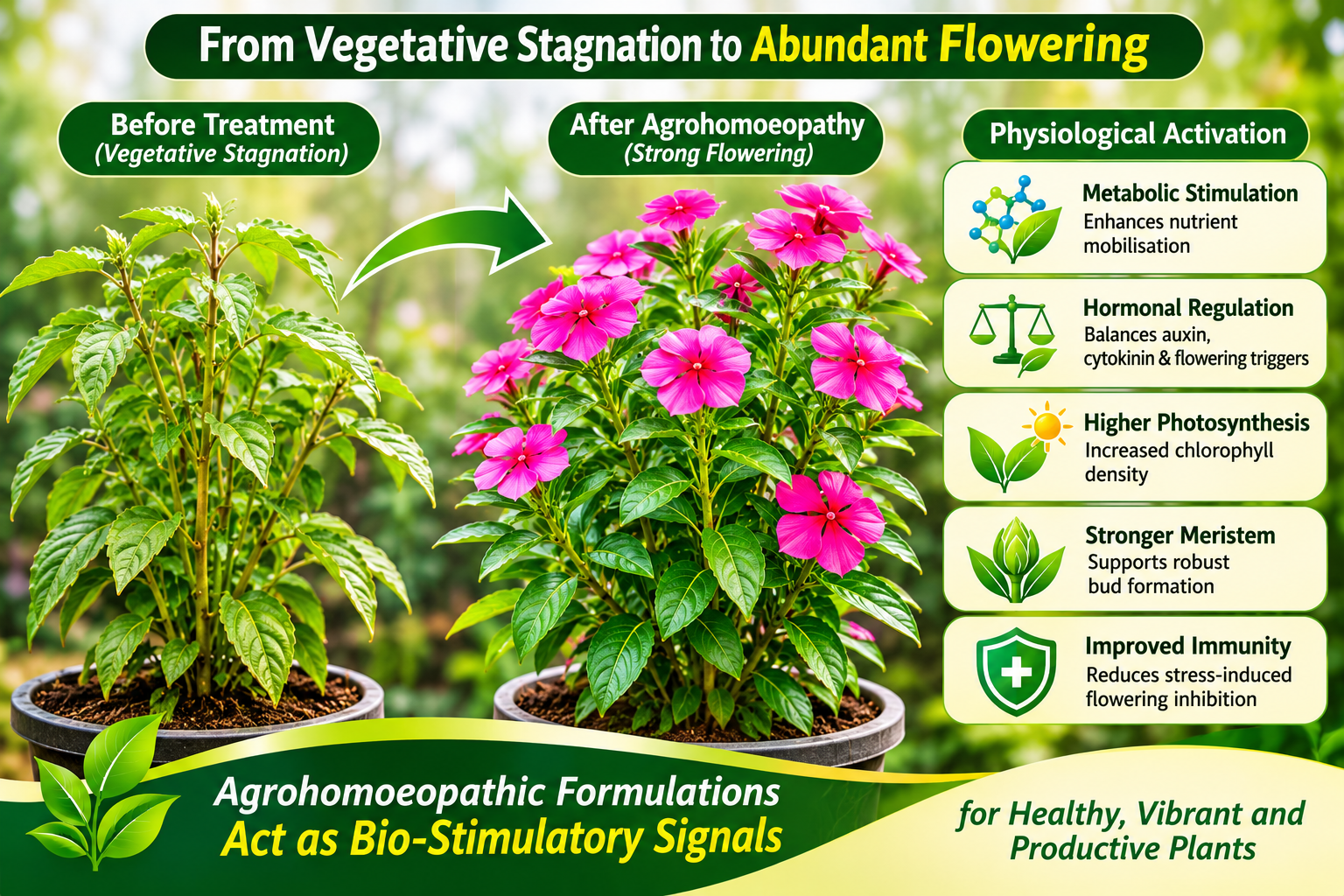
The treated plant exhibited visible transformation within a short period following the application of Garden Care. A plant that had remained non-flowering for a prolonged duration, initiated bud formation, followed by abundant and healthy blooms. The gardener observed not only successful flowering but also strengthened stems, improved leaf sheen and chlorophyll richness, and an overall revitalisation of plant structure.
The plant overcame its earlier stagnation, demonstrating uniform growth, increased foliage density, and enhanced resistance to minor stress. The response was described as “very effective,” indicating both functional and aesthetic improvement.
Discussion
The rapid shift from vegetative stagnation to strong flowering suggests activation of physiological pathways associated with:
Metabolic stimulation, enhancing nutrient mobilisation
Hormonal regulation, particularly the balance between auxin, cytokinin and flowering triggers
Enhanced photosynthetic efficiency, evidenced by increased chlorophyll density
Strengthening of meristematic tissue, enabling robust bud and flower formation
Improved plant immunity, reducing stress-induced inhibition of flowering
Agrohomoeopathic formulations are theorised to act as bio-stimulatory signals that modulate plant enzymatic systems and cellular responses even at ultra-low doses. Although this case does not quantify biochemical changes, the field evidence aligns with existing reports of agrohomoeopathic efficacy in ornamental species.
This report is a single-case observation and does not include controlled trials, quantitative physiological measurements.
Conclusion
Garden Care demonstrated notable effectiveness in stimulating flowering, strengthening vegetative growth, and improving overall plant health in a homestead setting. The case suggests that agrohomoeopathy provides a sustainable, low-cost and non-toxic alternative for managing non-flowering and stunted ornamental plants. Wider field trials and scientific evaluations are warranted to further validate these findings.
Buy now : https://manakkalagropharma.com/product/garden-care