


5 November 2026
Agrohomoeopathic Stimulation of Flowering, Fruit Recovery and Disease Resistance in Fruit Crops: Field Evidence from Kerala and Tamil Nadu Farmer-led field observations from Kerala and Tamil Nadu indicate that the agrohomoeopathic formulation Fruit Flavou
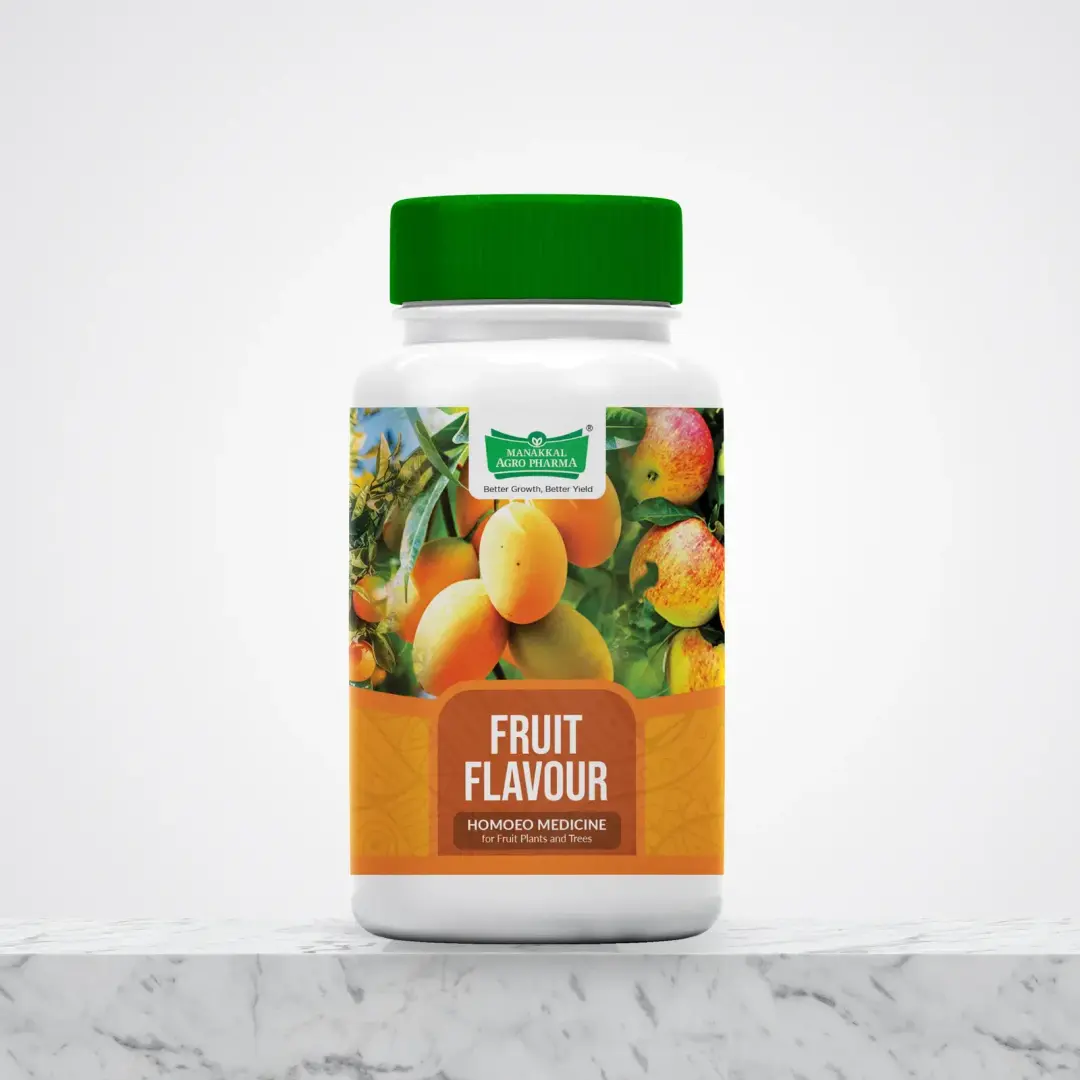
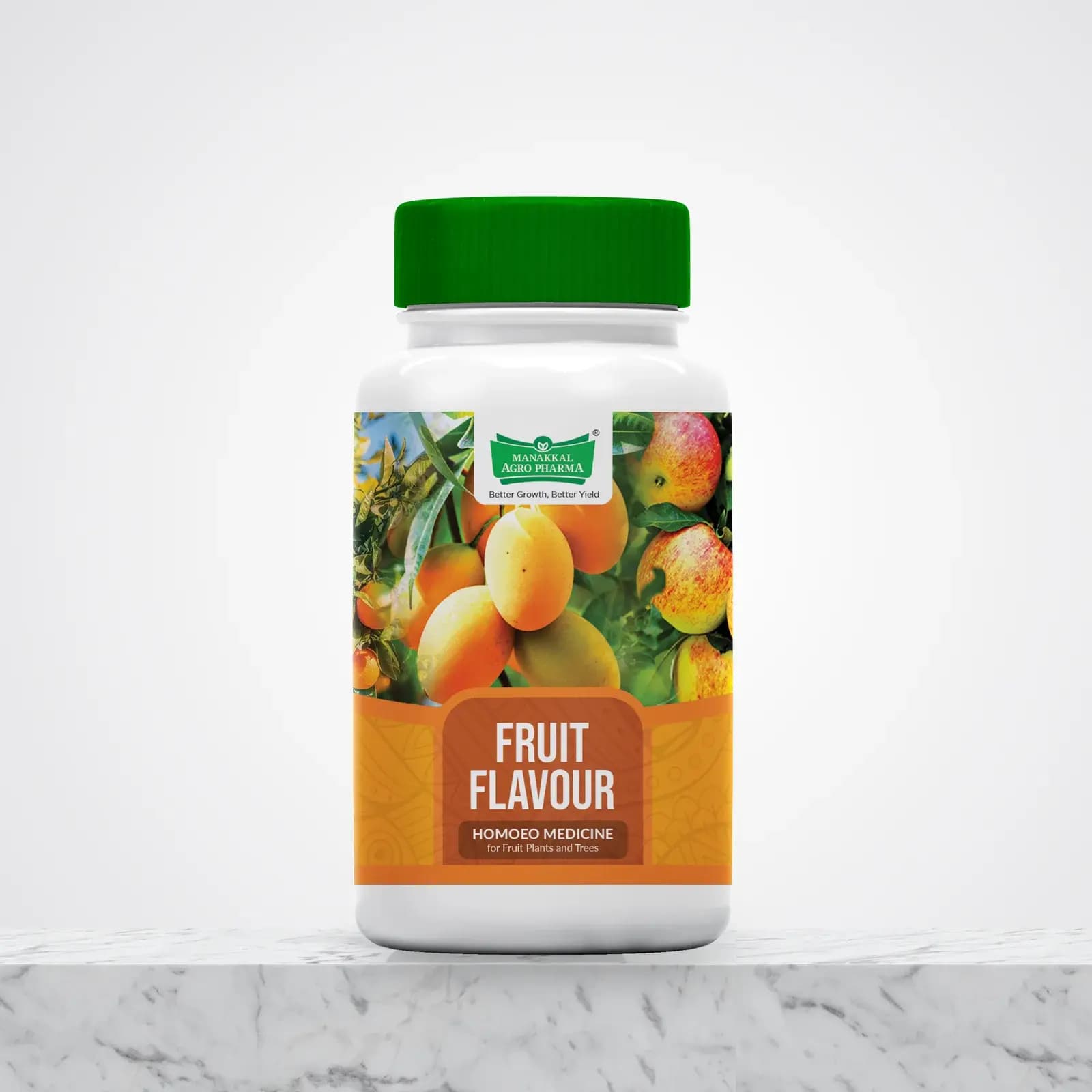
Fruit Flavour supports flowering, fruit setting and improved fruit development in fruit crops.
Farmer-led field observations from Kerala and Tamil Nadu indicate that the agrohomoeopathic formulation Fruit Flavour supports rapid flowering, enhanced fruit set and visible recovery from physiological stress in multiple horticultural crops. Across mango, sapota, guava, avocado, papaya and citrus, growers reported early flowering (within 1–2 weeks), improved fruit size, reduced pest pressure and recovery from chronic non-flowering or stunting conditions. This paper consolidates findings from diverse agro-climatic zones and demonstrates the potential of agrohomoeopathy as a low-cost, sustainable and residue-free horticultural strategy.
Introduction
Fruit crops in India face increasing challenges due to climate variability, soil fatigue, declining microbial health and overuse of pesticides and synthetic fertilisers. Non-flowering in perennial fruit trees, viral-like leaf deformities, fruit drop and physiological stunting are widespread but often difficult to reverse conventionally.
Fruits especially papaya is affected by several major diseases and pests that significantly reduce growth and yield. Among the diseases, Papaya Ring Spot Virus is the most destructive, causing mosaic patterns on leaves, distortion and ring-shaped marks on fruits. Fungal problems such as Powdery Mildew, which leaves a white powdery coating on foliage, and anthracnose, which produces sunken dark spots on ripe fruits, are common. Phytophthora blight leads to root and stem rot, often causing young plants to collapse, while bacterial leaf spot results in brown, water-soaked lesions and defoliation. Papaya is also vulnerable to a range of pests: mealybugs weaken plants by sucking sap and causing sooty mould; fruit flies lay eggs inside fruits leading to internal rotting; and red spider mites cause leaf yellowing and premature leaf drop. Aphids and whiteflies further stress plants through sap-feeding and by transmitting viral diseases, while thrips damage leaves and fruits by scraping tissues and leaving silvery streaks.
Agrohomoeopathy, a plant-friendly extension of homoeopathic principles is a sustainable alternative capable of resisting diseases, stimulating physiological balance, enhancing plant defence mechanisms and promoting natural flowering responses. This study compiles field-level evidence from farmers who voluntarily adopted Fruit Flavour, a homoeopathic formulation designed to enhance the reproductive phase of fruit crops.
Materials and Methods
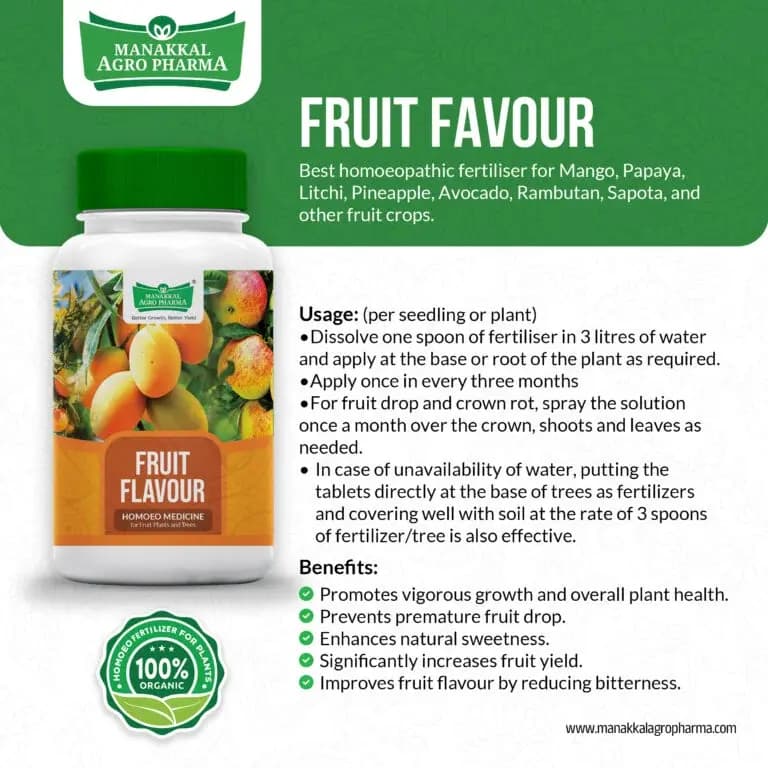
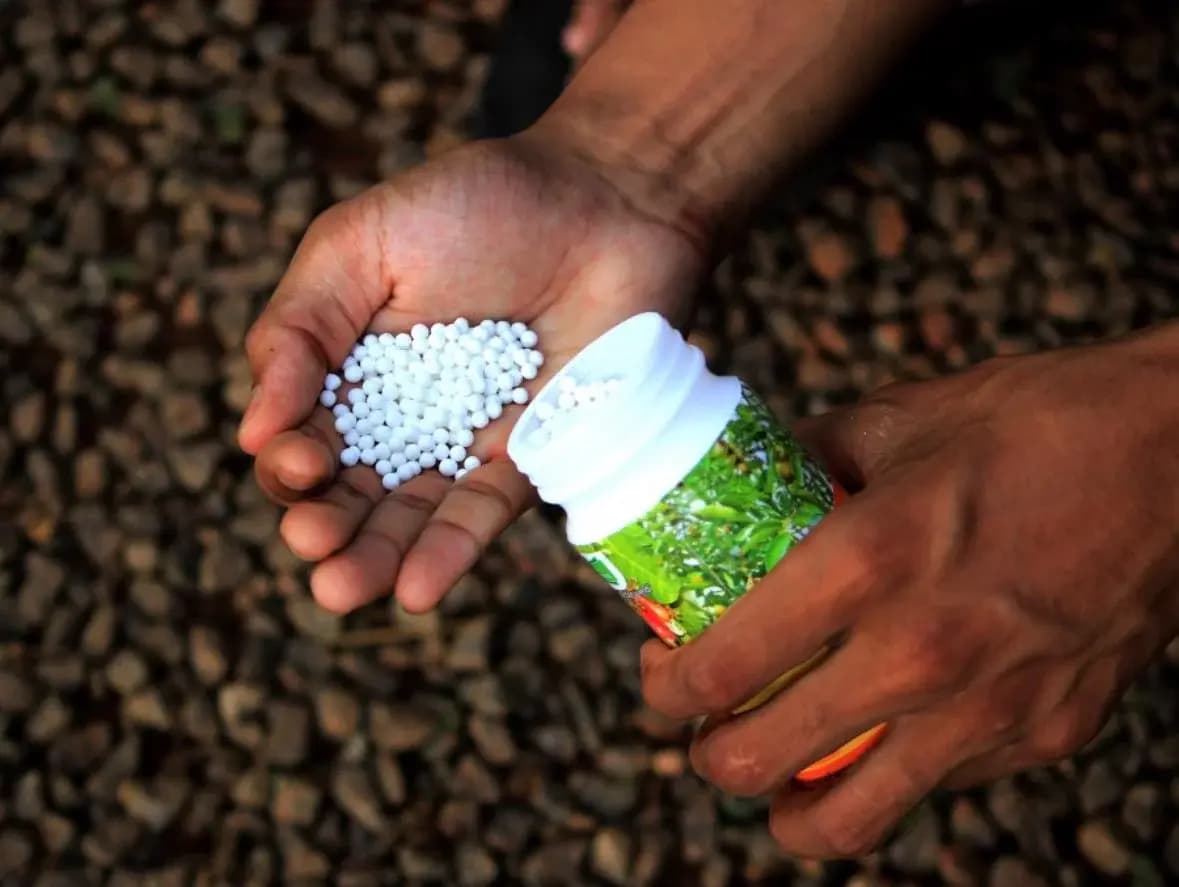
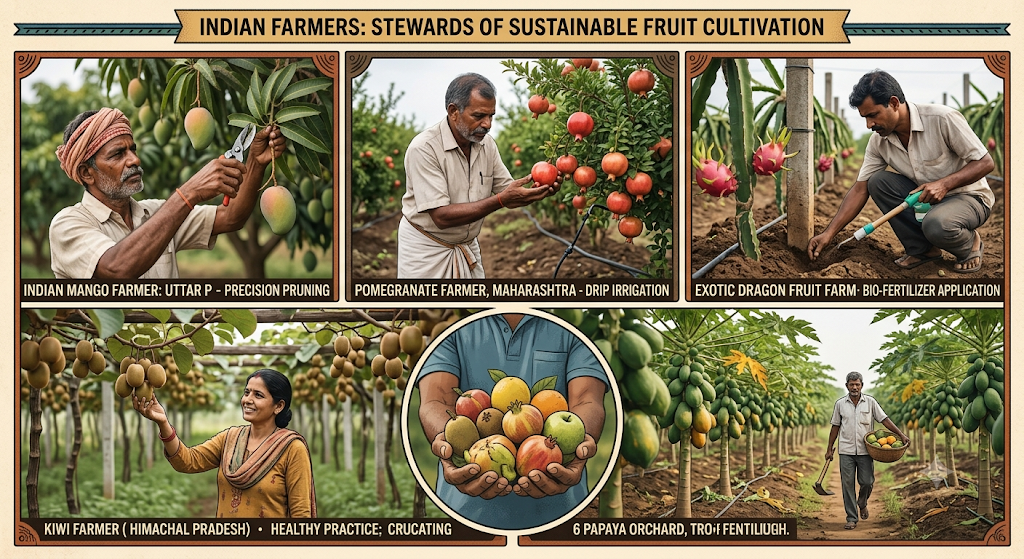
The Fruit Flavour formulation was applied by farmers across Kerala (Malappuram, Kozhikode) and Tamil Nadu (Muthur region). Standard preparation involved dissolving 50 tablets in approximately 3 litres of water, which was then applied as a foliar spray over the canopy or directly into the base of the plant. In larger farms, the solution was prepared in one 150-litre tank using one bottle Fruit Flavour for simultaneous multi-crop spraying.
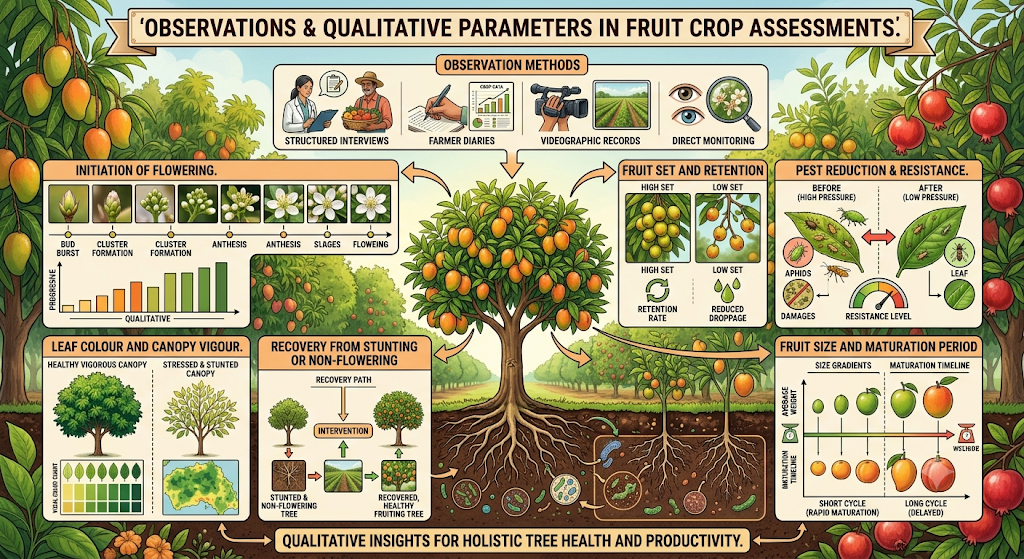
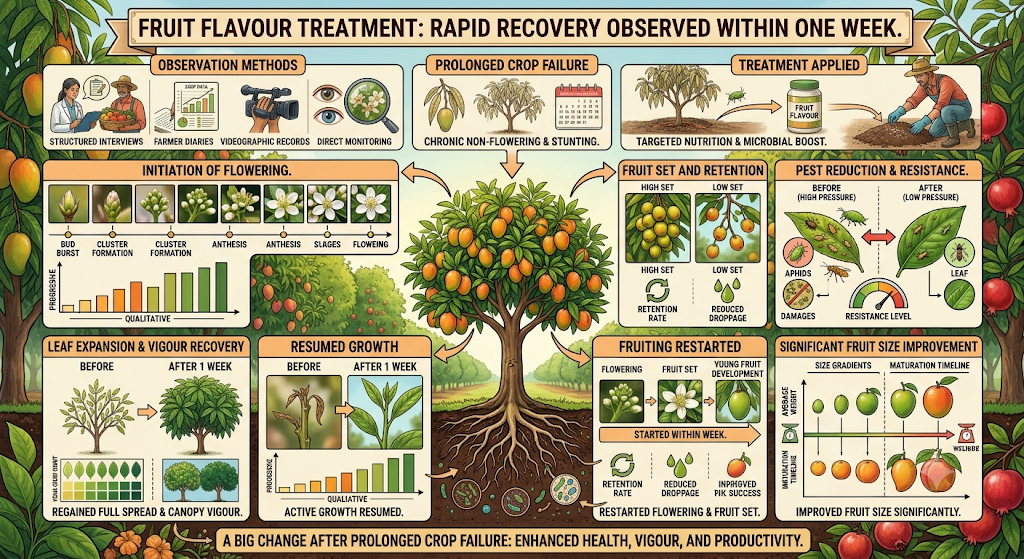
Applications were typically single-dose interventions, repeated only in cases where flowering delay or physiological stress persisted. Observations were collected through structured interviews, farmer diaries, videographic records and direct monitoring of flowering and fruiting responses.
Parameters assessed qualitatively that includes:
Initiation of flowering
Fruit set and retention
Pest reduction and resistance
Leaf colour and canopy vigour
Recovery from stunting or non-flowering
Fruit size and maturation period
Results and Farmer Case Evidence
Accelerated Flowering and Fruit Set in Mango and Sapota
Moidu (Tanur, Kerala)
A homestead farmer who had planted a mango tree 2.5–3 years ago observed no flowering until the introduction of Fruit Flavour. After spraying the formulation (50 tablets in 3 L water), flowering began within 1–2 weeks, and fruits formed within a month.
Multi-Crop Recovery and Pest Resistance in Tamil Nadu
Anil (Artist, Muthur, Tamil Nadu)
Managing a 4-acre farm with guava, sapota and citrus, Anil avoided chemical fungicides and relied solely on agrohomoeopathy. He reported:
Clear decline in pest incidence
Stronger resistance against viral and fungal diseases
Yellowing reduction and greener foliage
Rapid flowering
Increased fruit size
Overall enhancement in plant immunity
He highlighted that agrohomoeopathy aligned with his commitment to organic and residue-free production.
Avocado Non-Flowering Reversed After a Decade
Ashraf (Areekode, Kerala)
A retired teacher who began farming during the COVID lockdown had three avocado trees—10 years old and never flowered. After applying Fruit Flavour, the trees finally initiated flowering and produced fruits in the same season. Fruit sizes increased significantly in the next season, with some weighing up to 900 grams remarkable for the region, where avocado fruiting is generally rare.
Papaya Stunting Syndrome Reversal
Basheer (Mukkam, Kerala)
Basheer battled a severe papaya disorder resembling stunting syndrome. The symptoms observed in the affected papaya plants were multilayered. The leaves gradually became shrivelled and weak, losing their natural spread and vigour. Upward growth came to a complete halt, leaving the plant stunted and unable to produce new healthy tissues. The stem turned noticeably pointed and tapering toward the top, giving the plant a characteristic pencil-tip appearance. After an initial harvest, fruiting stopped entirely, and the plant showed no signs of recovery despite various interventions.
Conventional approaches including traditional treatments and repeated applications of chemical fertilisers, failed to provide any relief, compelling the farmer to search for an alternative solution.
After applying Fruit Flavour, changes were noticed within a week:
Leaves expanded and regained full spread
Growth resumed
Plants recovered vigour
Fruiting restarted
Fruit size improved significantly
He described this recovery as a big change after prolonged crop failure.
Discussion
Across all cases, Fruit Flavour consistently stimulated reproductive signalling, rapidly triggering flowering even in trees that had remained dormant for years. Recovery from physiological disorders such as papaya stunting and mango non-flowering indicates that Fruit Flavour influences plant hormonal and enzymatic pathways, optimise internal nutrient utilisation and restore metabolic balance.
The mechanisms based on agrohomoeopathic theory can be summarised in this way. Shrinking of leaves and spreading loses are signalling a decline in physiological strength. Upward growth stalled completely, and the plant remained stunted for months because the weakening of cellular activity in the plant as it unable to produce new healthy tissues. The stem developed a distinct pencil-tip tapering, indicating arrested meristematic activity. After the first harvest, fruiting ceased altogether, and no new flowers or fruits appeared. The failure of repeated traditional treatments and various chemical applications indicate the deep-rooted physiological disruption.
Fruit Flavour helps tissue regeneration and the plant slowly resumed active growth, with new cellular activity supporting the development of broader, greener leaves. The root system regains strength, reflected in enhanced root-hair formation that improved nutrient absorption and stabilised the plant’s metabolic functions. As a result, the overall immunity of the plant appeared to rise, as the once-persistent symptoms of stunting, leaf shrinkage and halted growth gradually disappeared.
Over time, the plants regained healthy turgidity and became greener and more vibrant. Fruiting resumed steadily, with noticeable improvements in fruit size and shape. This pattern of recovery suggested that the remedy supported subtle cellular corrections and physiological rebalancing, enabling the plants to overcome the stress-induced stagnation.
Conclusion
The field reports from Kerala and Tamil Nadu demonstrate that Fruit Flavour offers a low-cost, residue-free and environmentally safe strategy to manage persistent horticultural problems such as non-flowering, physiological stunting and pest-weakened productivity. The rapid responses such as flowering in 1–2 weeks, improved fruit size, and revived vigour suggest a promising role for agrohomoeopathy in sustainable horticultural intensification.
Larger controlled studies, physiological assays and multi-year monitoring would further clarify the mechanistic pathways involved in this management.
Buy now : https://manakkalagropharma.com/product/fruit-flavor