
4 November 2026
Agrohomoeopathic Management of Yellow Leaf Disease in Areca Nut: Evidence from Select Plantations of Kerala and Karnataka
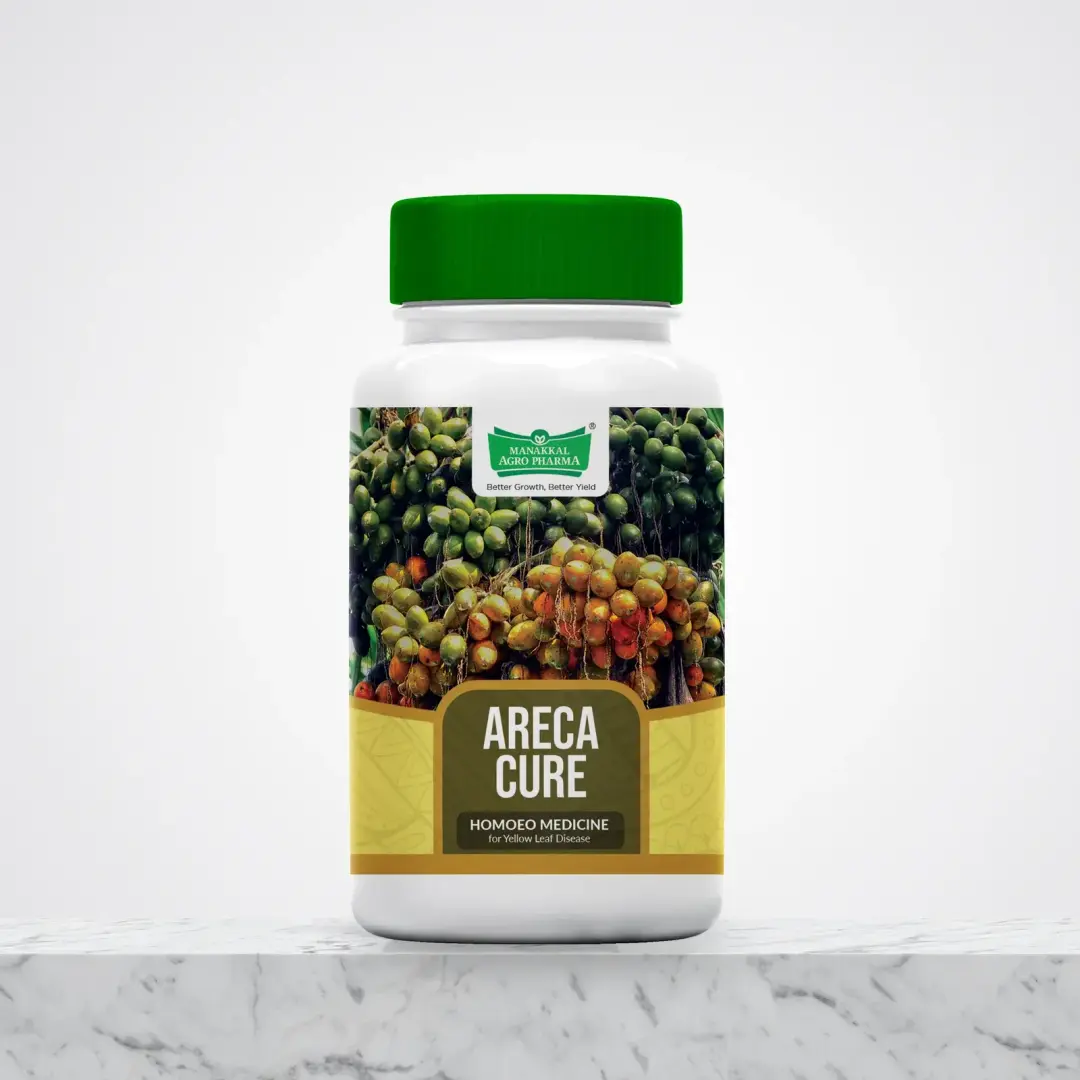
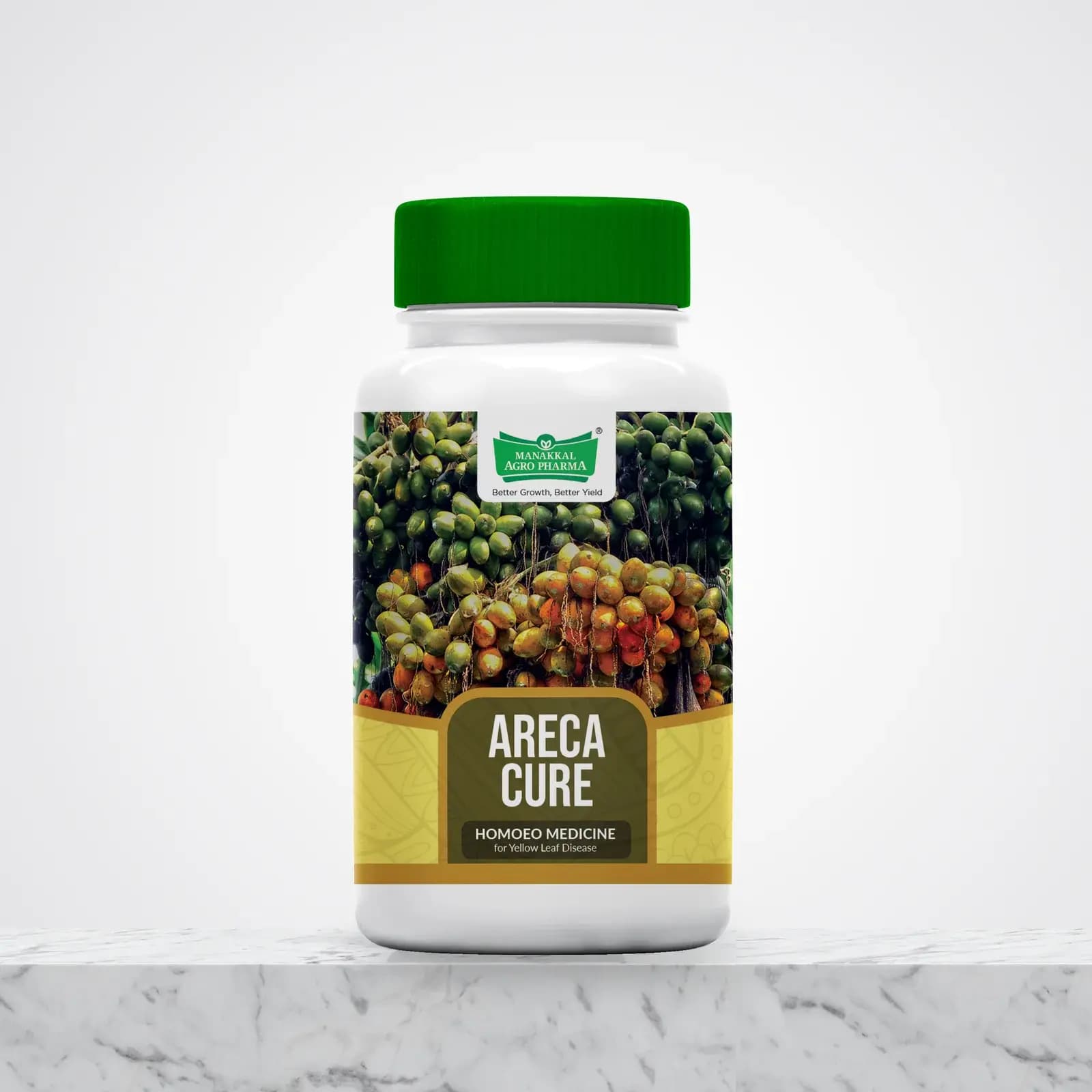
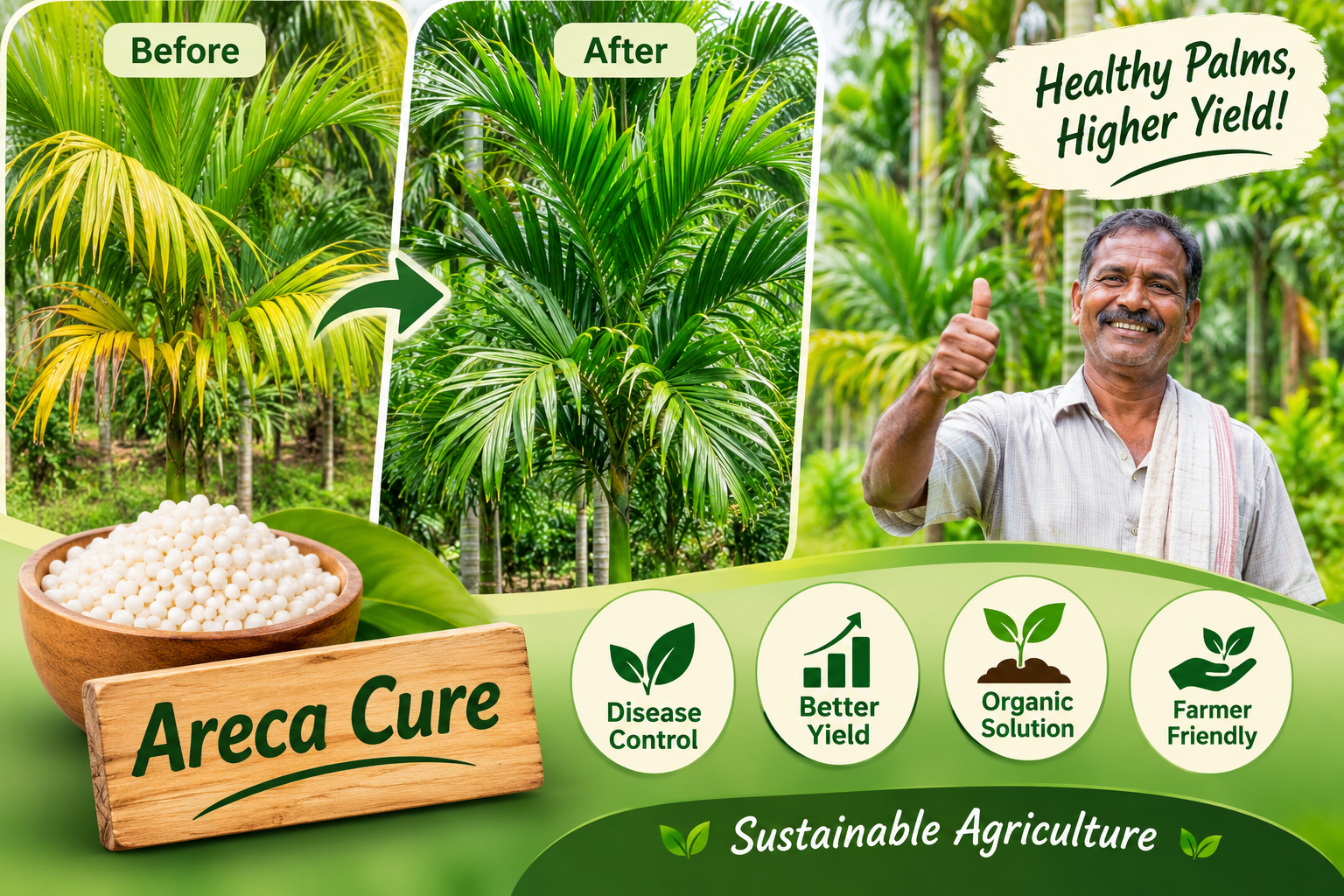
Areca Cure – Revitalising YLD-affected arecanut palms.
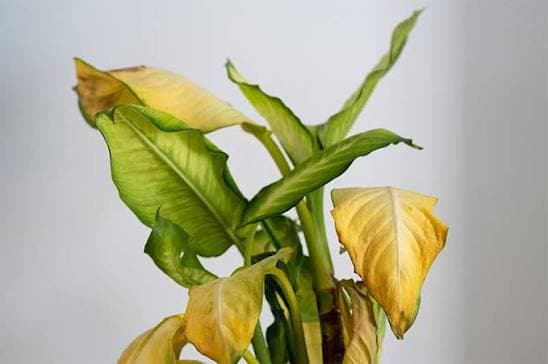
Yellow Leaf Disease (YLD) is a major physiological disorder affecting areca nut (Areca catechu L.) cultivation in South India, especially in Kerala and parts of Karnataka. The disease is associated with phytoplasma or Areca Palm Velarivirus 1 (APV1) infection and leads to progressive yellowing, reduced vigour and substantial yield decline. This study consolidates field-level observations from farmers across Kannur, Malappuram and Belthangady (Karnataka), where an agrohomoeopathic formulation, Areca Cure, was applied to symptomatic palms. Farmers consistently reported improvements within 3–5 weeks, including greener new leaves, enhanced crown vigour, reduced fruit drop and decline of leaf blight symptoms. The findings suggest that agrohomoeopathic remedy Areca Cure offers a promising, low-cost, scalable and environmentally safe strategy for the management of Yellow Leaf Disease.
Introduction
Areca nut cultivation holds major economic significance in Kerala and coastal Karnataka. Among various diseases affecting the crop, Yellow Leaf Disease (YLD) is one of the most destructive, leading to progressive chlorosis, physiological weakening and eventual yield loss of up to 50 per cent. The disorder has been linked to phytoplasma infections and more recently to APV1, with both pathogens disrupting chloroplast functions and reducing the plant’s photosynthetic efficiency.
Conventional management approaches such as soil amendments, vector control, nutrient application and palm removal generally deliver inconsistent results and remain financially challenging for small and marginal farmers. In this context, agrohomoeopathy has emerged as a sustainable, low-risk intervention that aligns with organic farming principles and farmer preferences.
This study documents multi-site field experiences using Areca Cure, an agrohomoeopathic preparation developed by Manakkal Agropharma, across plantations in Kerala and Karnataka.
Background of the Study Sites
The investigation is conceptualised as case studies conducted in Kadannappalli, Alakkod, Perinthalmanna, Nilambur, Vallappuzha, Kandotti, Kappimala, Cheruvizha and Belthangady situated in Kannur, Malappuram and Karnataka. This geographical coverage allowed for a more representative assessment of remedy performance under diverse agro-ecological and management systems.
These villages represent varied terrain types, rainfall patterns, soil textures and farming practices. Yet YLD, leaf blight, crown weakness and fruit drop were consistently reported as major constraints across these locations, underscoring the widespread nature of the problem.
Yellow Leaf Disease: Aetiology and Causative Agents
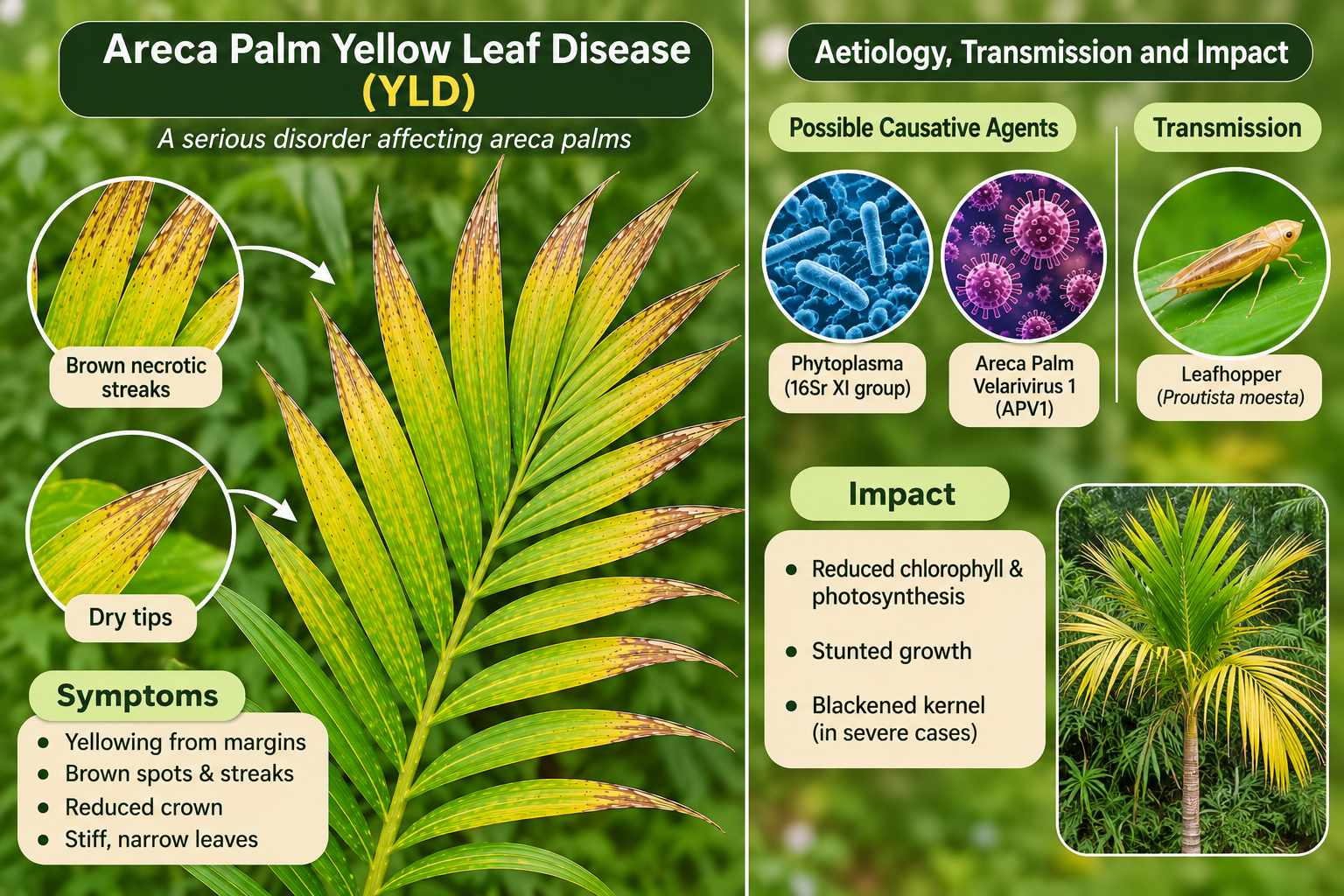
YLD in areca palms is a well-documented and serious condition. Historically, it has been associated with phytoplasma-like organisms. Molecular studies in India using nested PCR have identified phytoplasma from the 16Sr XI group in symptomatic palms. However, more recent research suggests a possible viral aetiology as well: Areca Palm Velarivirus 1 (APV1) has been implicated, where infection disrupts chloroplasts and depresses photosynthetic gene expression, leading to severe chlorosis and reduced carbohydrate synthesis, and overall stunted growth.
If chloroplasts are disrupted, the immediate outcome is a sharp decline in chlorophyll content and photosynthetic efficiency. This leads to reduced energy production in the plant, weakening physiological processes such as nutrient uptake, root development and new leaf formation. Over time, the plant becomes increasingly vulnerable to secondary stresses, accelerating decline.
Integrating biological findings with homoeopathic principles, the disease may also be viewed as arising from a reduction in the plant’s innate resistance capacity. When the plant’s natural defence mechanisms weaken, vectors more easily transmit pathogenic agents, which then exploit the physiological vulnerabilities of the host. Disturbances in nutrient absorption further compromise the plant’s ability to counteract the disease, especially when specific micronutrients required for defence are insufficient.
Symptoms and Progression
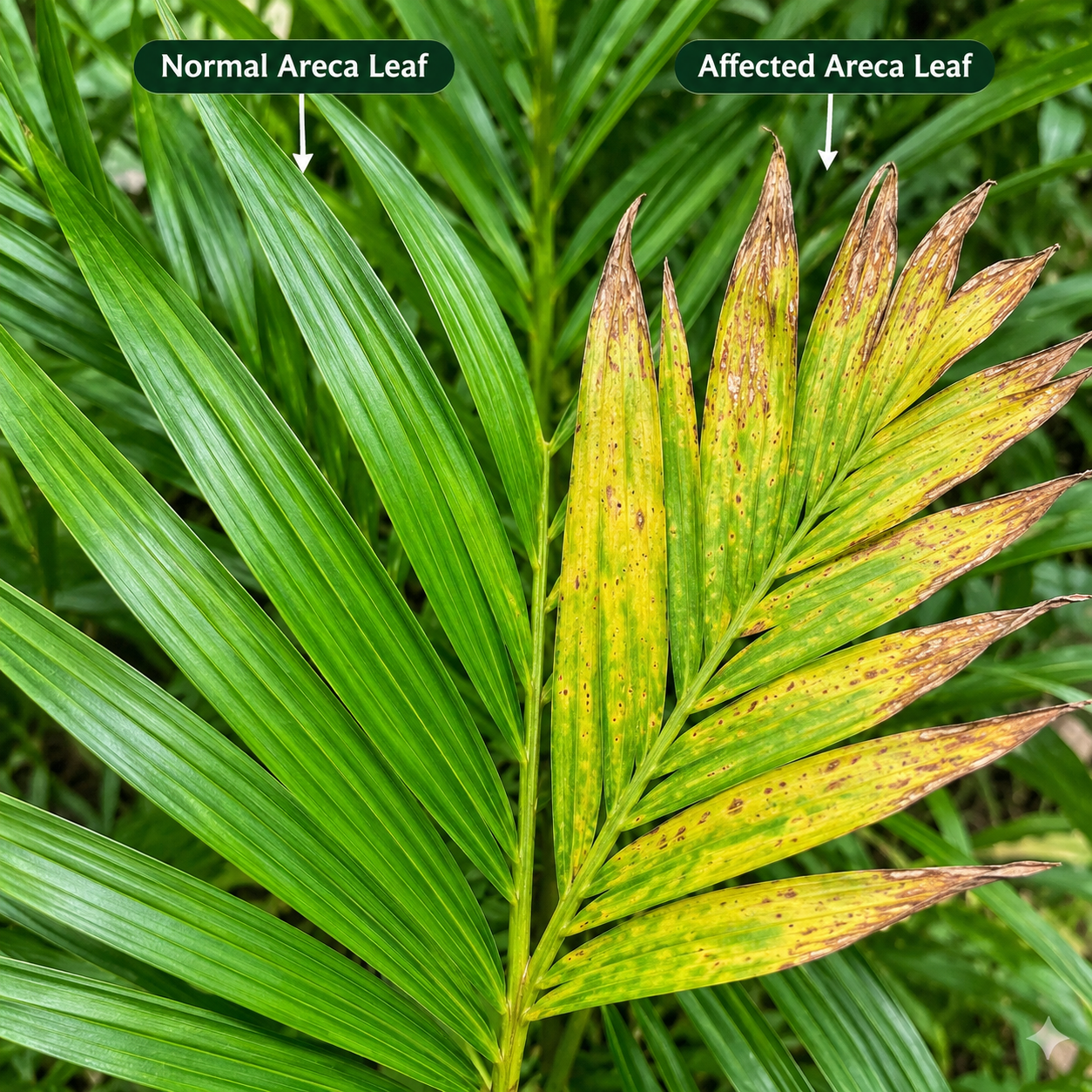
According to established extension resources, the early stages of Yellow Leaf Disease are marked by brown, necrotic streaks running parallel to the veins of newly unfolded leaves. As the disease progresses, chlorosis advances inward from the leaflet margins toward the mid-lamina. Leaf tips gradually dry, and entire leaves may turn yellow. In more severe cases, the crown size reduces and the leaves become stiff, narrow and pointed. Some may eventually drop, leaving a characteristic bare trunk.
The young feeder roots often turn dark, shrivel and rot, reducing the palm’s ability to absorb water and nutrients. In advanced stages, even the kernel (nut) becomes blackened, spongy, and unfit for consumption or processing.
YLD is also linked to transmission by leafhoppers, particularly Proutista moesta. These insects feed on phloem sap and, in the process, acquire and transmit phytoplasmas directly into the vascular system of healthy palms, allowing the pathogen to spread systemically.
Conventional management practices include removing severely affected palms, improving soil drainage, incorporating organic manures such as compost and green leaves and applying rock phosphate. However, despite these efforts, field evidence shows that substantial recovery is uncommon and disease progression often continues.
Area Affected | Key Symptoms | Outcome |
|---|---|---|
Leaves (early stage) | Brown streaks along veins; marginal yellowing; chlorosis on outer whorls | Progressive decline if untreated; photosynthesis begins to weaken |
Leaves (advanced) | Entire leaves yellow; tips dry; stiff, pointed leaves; reduced crown size | Crown thinning; reduced energy production; poor canopy structure |
Roots | Darkening, rotting of feeder roots; reduced root mass | Poor nutrient and water uptake; plant becomes physiologically weak |
Nuts/Kernel | Blackish, soft, spongy nut tissue | Nuts become unmarketable; significant yield and economic loss |
Whole plant | Stunting, reduced vigour, uneven crown, eventual decline | Long-term mortality risk; productivity drops up to 50% or more |
Impact and Losses
Yellow Leaf Disease exerts a substantial negative impact on areca palm health and productivity. Both physiological functions and economic returns are compromised as the disease advances, making it one of the most concerning disorders for farmers in Kerala’s major areca-growing regions.
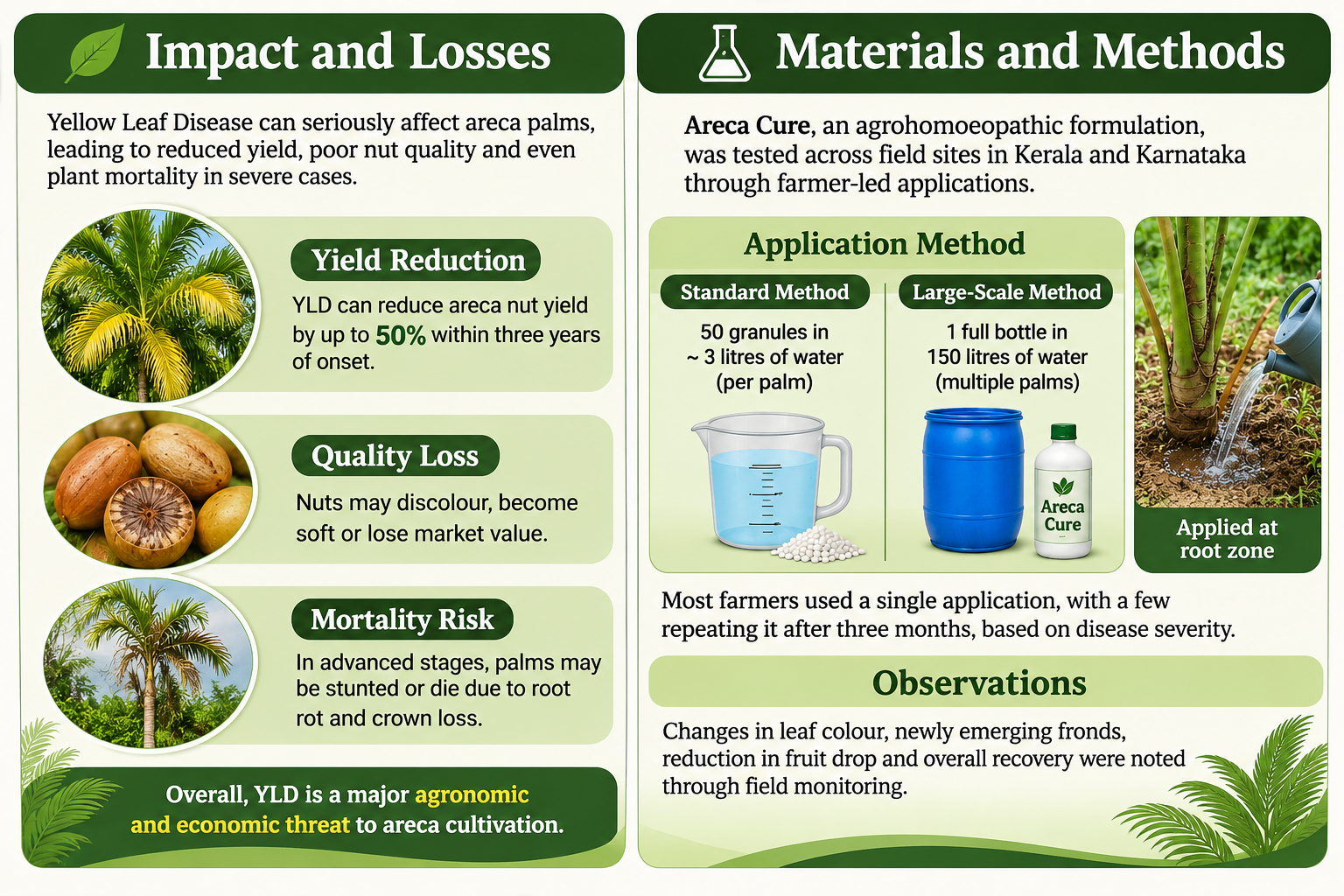
Yield Reduction: According to cultivation manuals, YLD can reduce areca nut yield by up to 50% within three years of the onset of disease.
Quality Loss: The nuts from infected palms may discolour, become soft or have compromised structural integrity, reducing their usability and market value.
Mortality Risk: In advanced disease, palms may be stunted or physiologically weakened; root rot and crown loss may worsen viability.
Overall, YLD represents a serious agronomic and economic threat to areca cultivation in Kerala, undermining both productivity and long-term plantation sustainability.
Materials and Methods
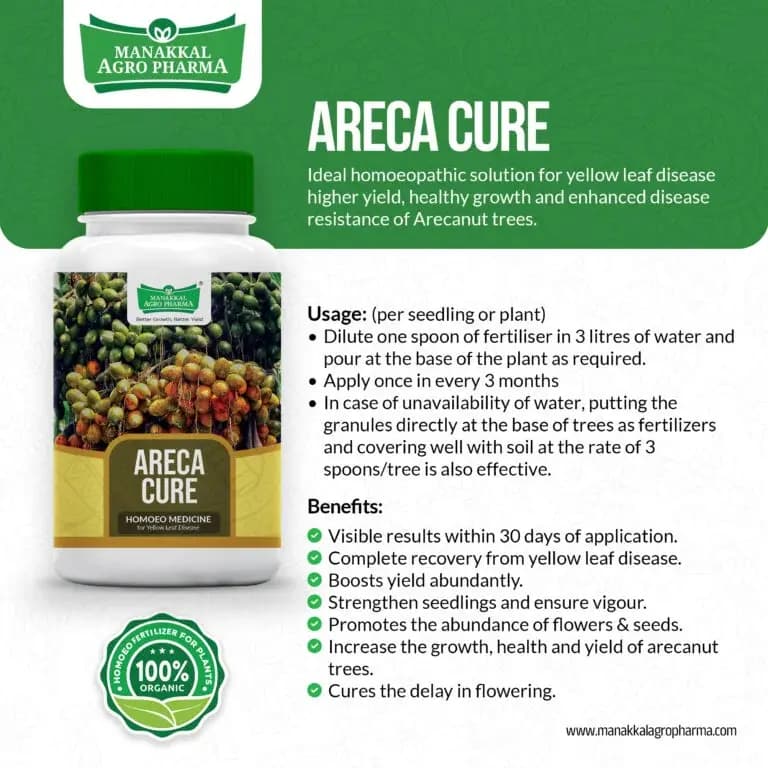
The agrohomoeopathic formulation Areca Cure was evaluated across multiple field sites in Kerala and Karnataka through voluntary farmer-led applications. Although most farmers followed the standard dosage of dissolving 50 granules in approximately 3 litres of water per palm, several large-scale cultivators used the alternative method of dissolving one full bottle in 150 litres of water, allowing simultaneous treatment of multiple palms through proportional basal drenching. In both approaches, the solution was applied directly at the root zone, ensuring maximum uptake through the feeder-root system. Most farmers required only a single application; however, a few repeated the treatment after three months depending on disease severity and environmental conditions.
Observations were recorded qualitatively through verbal interviews, photographic documentation and periodic field monitoring. Key parameters included changes in leaf colour, quality of newly emerging fronds, crown vigour, reduction in fruit drop, decline in leaf blight symptoms and overall structural strength and recovery of the palm.
Observation Analysis and Inferences
Across all field sites, recovery patterns were comparable to (or in several cases faster than) the initial results obtained in Kadannappalli. Farmers consistently reported improved green pigmentation in emerging fronds, absence of further chlorotic spread, strengthened crown development with upright new whorls, and noticeable reduction in fruit drop, particularly in Belthangady and Alakkod. Leaf blight symptoms diminished visibly, and most palms exhibited physiological recovery within 3–6 weeks of treatment.
These outcomes collectively suggest enhanced chlorophyll regeneration, stabilisation of metabolic processes, improved root activity and possible stimulation of plant defence pathways. The consistency of responses across diverse agro-ecological zones strengthens the inference that the remedy may promote a multi-pathway recovery process rather than a single-factor intervention.
Expanded Field Trials and Farmer Experiences
Across the various field sites in Kerala and Karnataka, farmers consistently reported a similar pattern of recovery in areca palms after applying the agrohomoeopathic formulation. Cultivators managing both small homestead plots and large plantations observed that palms affected by Yellow Leaf Disease, leaf blight, crown weakening, kernel drop and general decline began showing visible improvement within a few weeks of treatment. Many farmers noted the emergence of fresh green fronds, enhanced leaf sheen and a noticeable strengthening of the crown structure. Early-stage yellowing stabilised without further spread, while longstanding cases of chronic YLD displayed gradual regeneration marked by deeper green pigmentation and improved physiological vigour.
Several cultivators highlighted significant reductions in fruit drop, including in areas where monsoon-season drop had been an annual inevitability. Reports also pointed to decreased blight severity, better nut setting and a stronger overall palm frame. Farmers managing large numbers of palms—whether through basal drenching or diluted bulk application—consistently mentioned improved uniformity in new-leaf growth and better structural resilience of the palms. In plots where kernel drop and rhizome-related issues were severe, growers documented clear symptomatic decline and healthier subsequent growth.
Fr. Michael Kizhakkeparambil, from St Antony’s (The Abbot) Church, Pala, Kottayam, manages extensive cultivation around the church premises, including coconut palms, pepper vines, rubber trees, plantain, areca-nut palms, and seasonal vegetables. Father testifies that the areca-nut palms produced a higher nut yield than previous seasons.
Many emphasised cost-effectiveness as a major advantage, noting that the remedy replaced or significantly reduced their dependence on chemical fertilisers and plant-protection inputs, thereby lowering cultivation expenses by a substantial margin. Some farmers who were previously on the verge of abandoning areca cultivation reported renewed confidence after observing recovery, with one case even involving the complete revitalisation of a palm believed to be beyond saving. Collectively, these testimonies indicate a consistent trend of improved palm health, reduced disease expression and enhanced productivity across diverse agro-ecological and management conditions.
Economic and Practical Benefits
The use of Areca Cure demonstrated several economic and operational advantages for smallholder farmers. The remedy required only a small number of granules per plant, ensuring that the overall input cost remained low and accessible to farmers across income levels. Labour requirements were minimal, as the procedure involved a simple, single-step basal application that could be performed by the farmer without assistance.
A single application was sufficient for noticeable improvement, eliminating the need for repeated spray cycles, technical expertise or specialised equipment. The process required no machinery, protective gear or chemical handling, thereby reducing health risks and making the treatment highly farmer-friendly.
Sustainable Agriculture
An important advantage of this approach is its organic and non-chemical nature. The formulation does not rely on synthetic insecticides, tetracycline drenches or heavy chemical inputs typically used in conventional Yellow Leaf Disease management. This makes the remedy environmentally safe, soil-friendly and suitable for long-term sustainable agriculture practices.
Discussion
The field observations suggest that Areca Cure agrohomoeopathic remedy influences several physiological processes that support recovery from YLD. One is the stimulation of plant defence responses, enabling palms to better tolerate stress caused by the disease. Another is the improvement of root activity and rhizosphere balance, which can enhance nutrient uptake and overall metabolic stability.
The remedy may also help reduce the expression of chlorosis-related physiological disorders commonly associated with viral or phytoplasma involvement in YLD. As canopy vigour and new-leaf health improve, the palms are likely to show better yield performance, since areca-nut productivity is closely linked to crown health.
Taken together, these indicate that the remedy may act through a combination of physiological, biochemical and soil-mediated pathways. However, controlled experiments and repeat trials across different agro-climatic conditions are essential to validate these interpretations and understand the mechanisms more precisely.
Limitations of the Study
Multi-season experimental validation is required to evaluate durability and mechanisms of action. Controlled experiments, physiological studies and pathogen-detection assays will further strengthen scientific understanding.
Suggestions and Conclusion
Field results from Kerala and Karnataka demonstrate that Areca Cure can serve as a farmer-friendly, low-cost and ecologically safe intervention for Yellow Leaf Disease in areca nut palms. Given its scalability and minimal risk, the following measures are recommended:
Government-supported subsidised distribution of agrohomoeopathic remedies through existing agricultural outlets.
Promotion of poison-free farming by integrating agrohomoeopathy into organic cultivation programmes.
Strengthened scientific research, including long-term trials, physiological studies and pathogen-load assessments.
Structured evaluation across varied agro-climatic zones to develop state-wide guidelines.
The favourable farmer feedback indicates that agrohomoeopathy holds genuine promise as part of a holistic plant health-management system
Buy now : https://manakkalagropharma.com/product/areca-cure