5 November 2026
Disease Management in Coconut Palms and Yield Improvement: A Multisite Study of Agrohomoeopathic Inputs in Kerala
Agro Yield strengthens palm health, boosts pest resistance and improves fruiting
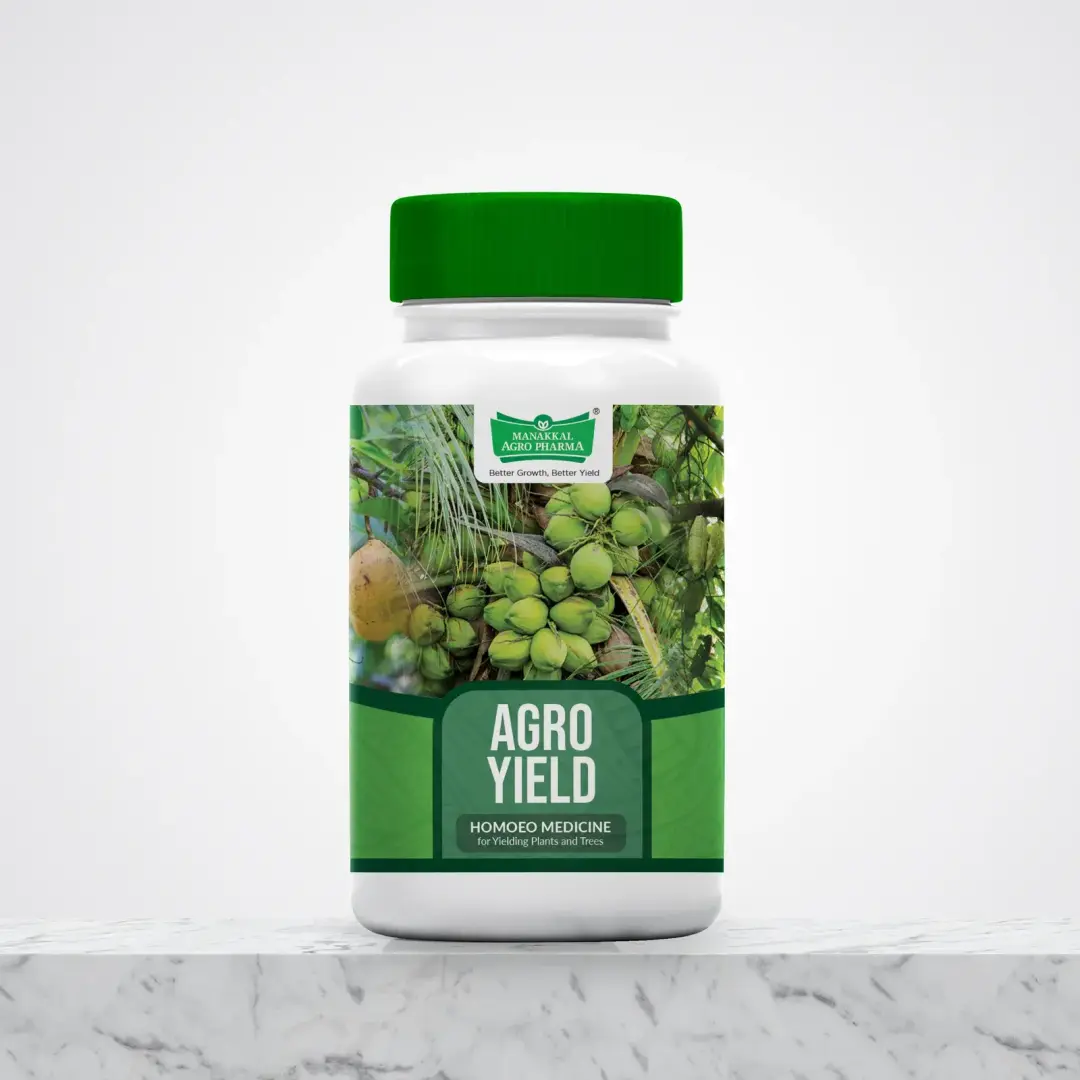
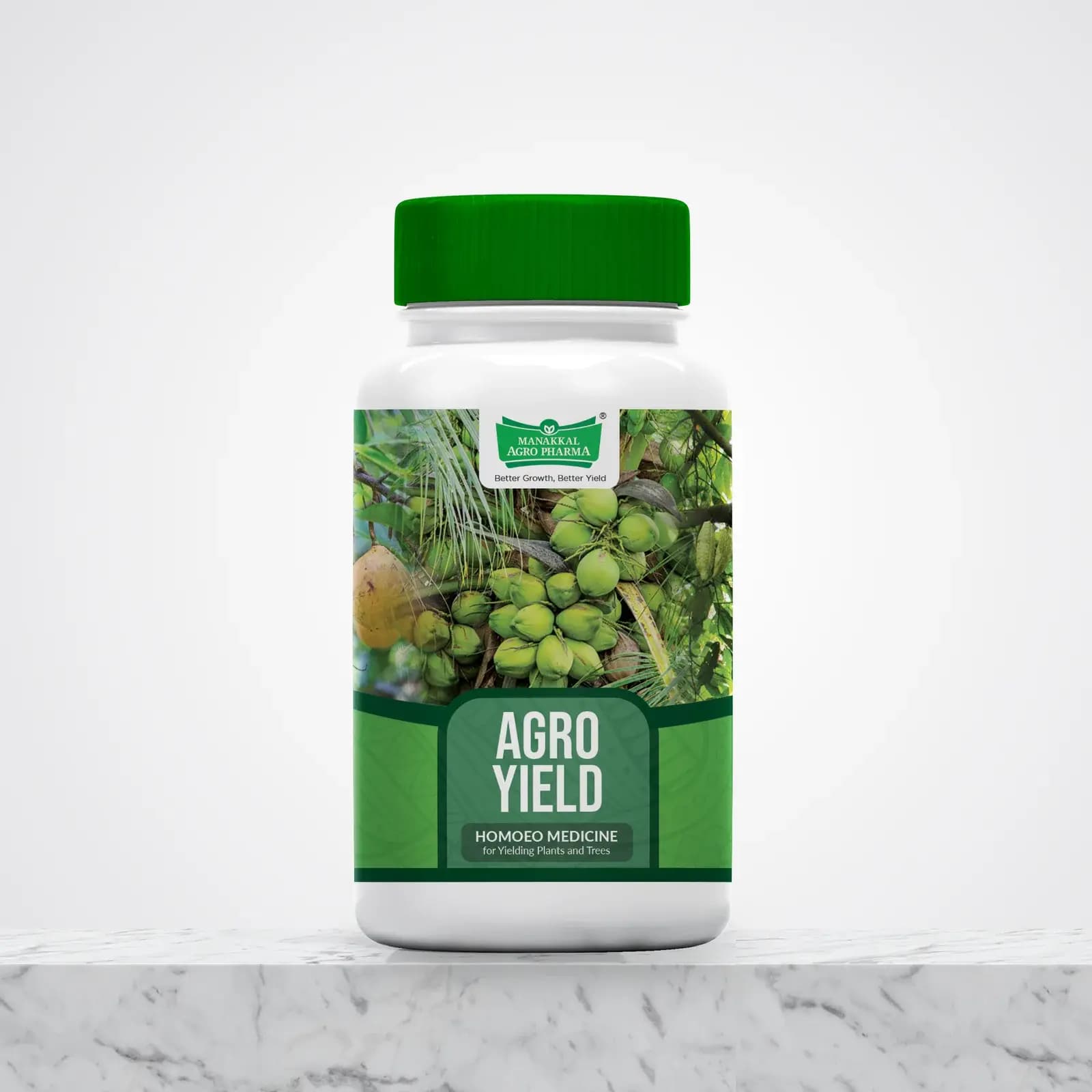
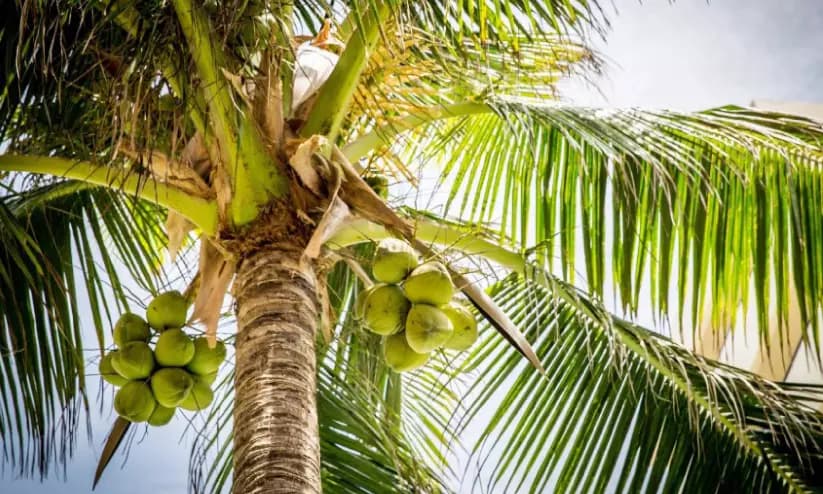
Coconut cultivation in Kerala has increasingly faced serious challenges due to bud rot, crown rot, leaf rot, rhinoceros beetle damage, red palm weevil infestation and widespread fruit drop. Conventional chemical management is often costly, labour-intensive and frequently ineffective, especially when repeated applications fail to prevent reinfestation. This study presents evidence gathered from diverse coconut-growing regions across Kerala, where farmers adopted the agrohomoeopathic formulation Agro Yield as a sustainable alternative. Application commonly involved dissolving 50 granules in 1 litre of water per tree and administering the solution at the crown or root zone as required. Farmers consistently reported improved chlorophyll expression, enhanced crown vigour, reduction in pest-related damage, increased fruiting even in previously unproductive palms and significant economic advantages. These testimonies suggest that Agro Yield may offer an effective, low-cost and environmentally safe approach to coconut health management.
Introduction
Coconut palms are integral to Kerala’s agricultural economy, yet productivity has been steadily compromised by a combination of fungal diseases, physiological stress and destructive insect pests. Crown rot, leaf rot, bud rot, fruit drop and invasive insects such as the rhinoceros beetle and red palm weevil remain persistent threats. Efforts to manage these problems through chemical fertilisers, pesticides and routine crown treatments have yielded limited long-term results and have imposed high financial burdens on farmers—especially smallholders.
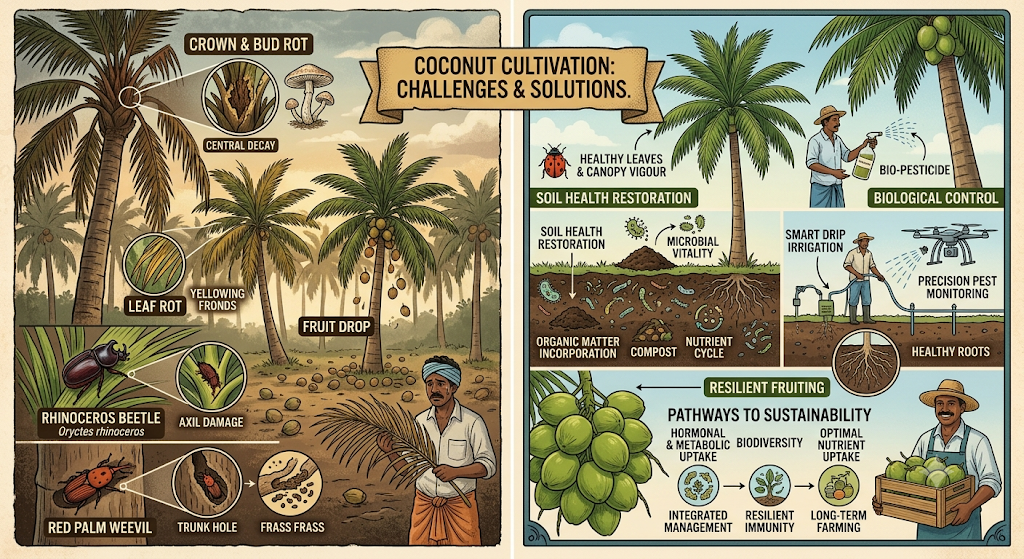
Table-1 Major Coconut Palm Diseases
Disease | Affected part | Causal Agent | Outcome / Result |
Bud Rot | Central spindle, growing bud | Phytophthora palmivora (fungus-like pathogen) | Death of the young bud, collapse of spindle, foul odour; fatal if untreated. |
Root Wilt Disease | Root system, leaves | Phytoplasma | Yellowing of leaves, root degeneration, reduced nut production, stunted growth. |
Stem Bleeding | Trunk / stem bark | Thielaviopsis paradoxa (fungus) | Brown to black lesions, oozing reddish-brown fluid, internal tissue decay. |
Grey Leaf Spot | Leaves (mostly mature leaflets) | Pestalotiopsis palmarum (fungus) | Small grey spots enlarging into necrotic patches; reduced photosynthesis. |
Leaf Rot | Young leaf region, spear leaf | Geotrichum candidum and secondary pathogens | Rotting of young leaves, leaf distortion, weakened crown. |
Crown Choke | Crown region, emerging leaves | Physiological disorder (non-pathogenic) | Emerging leaves fail to open; malformed crown; yield decline. |
Ganoderma Wilt | Base of trunk, internal tissues | Ganoderma lucidum / G. applanatum (fungi) | Basal stem rot, weakening of trunk, gradual wilting, eventual death. |
Fruit Rot / Nut Fall | Immature nuts | Phytophthora palmivora, Colletotrichum spp. | Premature nut drop, rotting of perianth, significant yield loss. |
Button Shedding | Immature inflorescences and young nuts | Physiological, poor nutrition, drought, pests | Nut drop at early stages, reduced fruit set and yield. |
Against this backdrop, agrohomoeopathy has emerged as a promising alternative due to its low cost, environmental compatibility and potential to stimulate plant vitality from within. This study compiles field-level experiences from coconut farmers across Kerala who adopted Agrohomoeopathic remedy Agro Yield to rejuvenate diseased palms, resist pests and enhance fruiting performance.
Materials and Methods
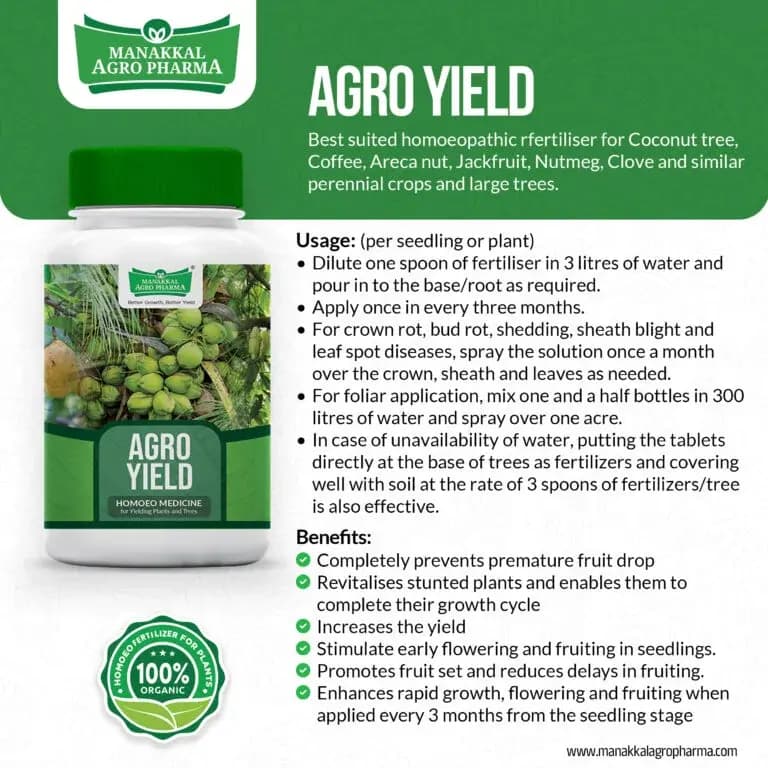
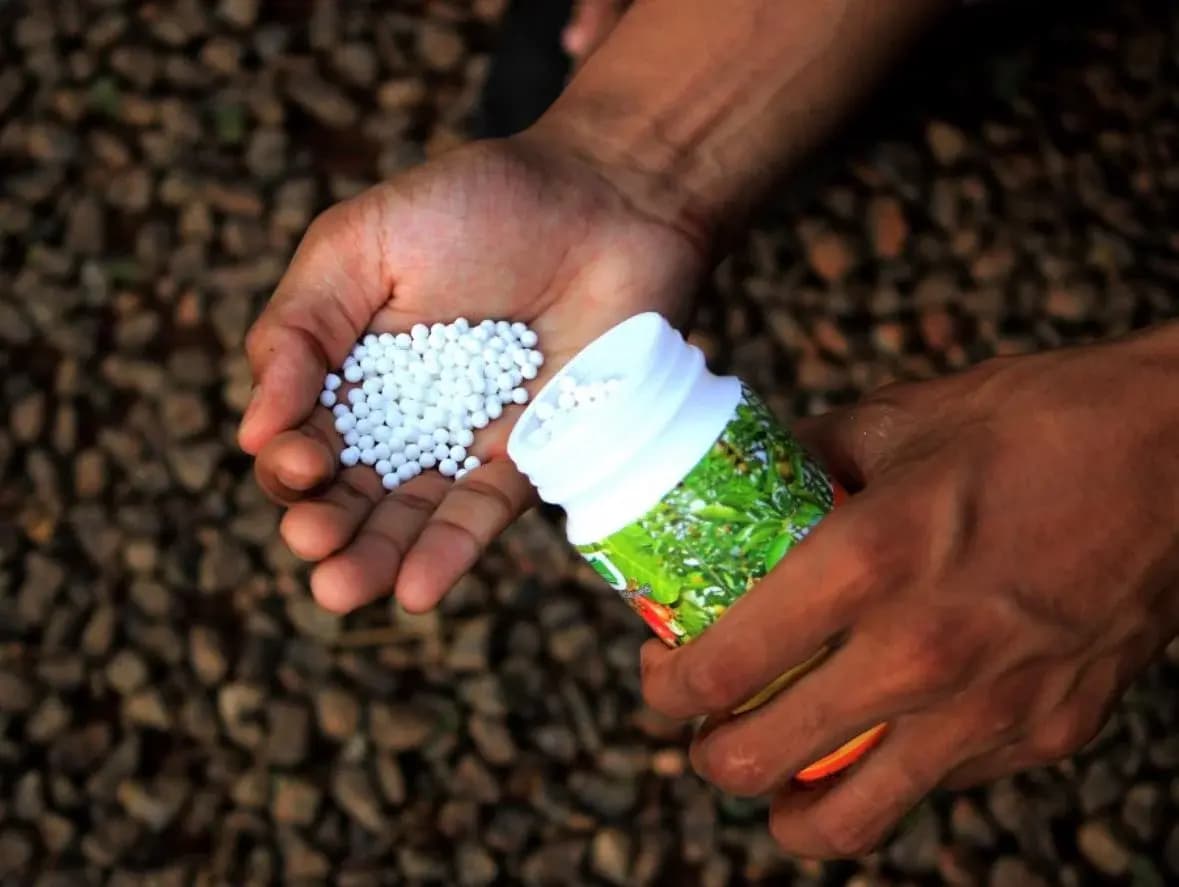
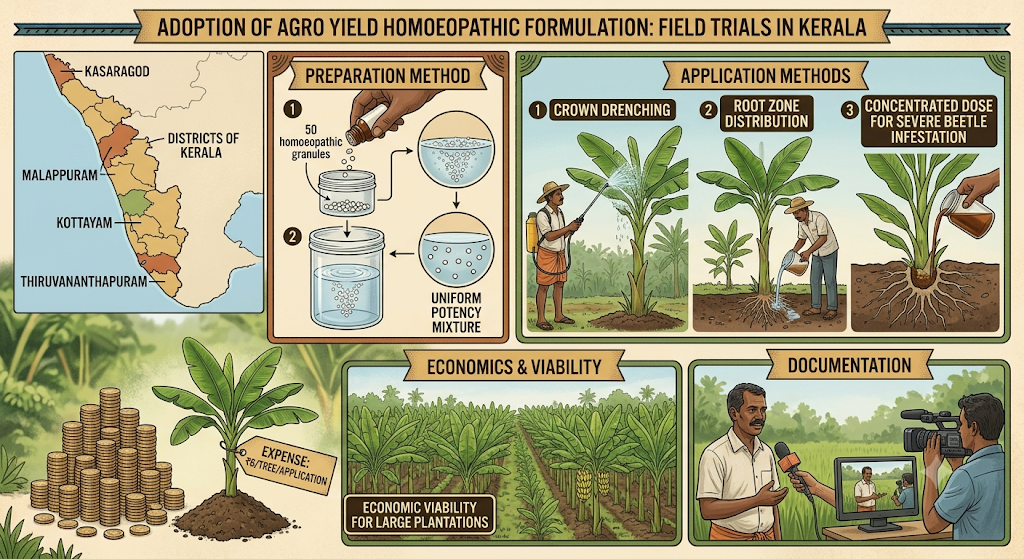
Farmers from Thiruvananthapuram, Kottayam, Malappuram, Kasaragod and other districts adopted the Agro Yield homoeopathic formulation under natural field conditions. The standard method of preparation involved dissolving 50 granules in 1 litre of water, which was then applied either as a crown drench or distributed around the root zone. In palms severely affected by beetle infestation or crown damage, concentrated doses were poured directly into the crown cavity.
Most farmers administered the remedy once every three months, with a total expense of approximately ₹6 per tree, making the method economically viable even for large plantations. Observations were recorded through interviews and videographic documentation.
Key parameters monitored included: crown health and recovery, reduction of rot symptoms, resistance to rhinoceros beetle and red palm weevil, fruit initiation and retention, chlorophyll density and leaf spread, general vigour, height gain and canopy expansion. Because applications occurred across diverse agro-climatic zones, the study reflects real-world variability and farmer-driven evaluation.
Findings and Inferences
Across all regions, farmers uniformly reported substantial improvements in coconut palm health following the use of Agro Yield.
Robi from Vakkom (Thiruvananthapuram), managing just 10 palms in an 8-cent plot, observed complete recovery from crown rot and leaf rot alongside notably greener foliage, unusually dense leaf spread and accelerated height gain—attributes not commonly seen in untreated trees. The remedy’s cost-effectiveness—₹6 per palm for three months—was emphasised as a key advantage.
Traditional farmer Augustin from Pala (Kottayam) recorded fruit initiation in all palms, including those that had not flowered for years. In Kasaragod, Jose Kutty reported the disappearance of chronic fruit drop; trees that previously produced only 10–15 coconuts per harvest showed significantly higher nut set after treatment.
Severe pest-affected regions showed equally strong results. Moidutty of Angadippuram (Malappuram), who cultivates two acres various crops alongside his business, faced repeated rhinoceros beetle and red palm weevil attacks. One palm had completely lost its crown, and local experts advised cutting it down. After applying Agro Yield, the crown regenerated and the palm resumed healthy growth. Another previously barren palm began fruiting. He observed near-total resistance to beetles and a marked increase in vigour.
Farmers such as Leelamma Joseph of Kalathur (Kottayam) reported that palms on the verge of decline regained crown health, improved leaf coloration and produced stronger nuts. Many who had considered abandoning coconut farming due to losses now express renewed confidence.
Fr. Michael Kizhakkeparambil, from St Antony’s (The Abbot) Church, Pala, Kottayam, manages extensive cultivation around the church premises, including coconut palms, pepper vines, rubber trees, plantain, areca-nut palms, and seasonal vegetables. According to Fr Michael, the young coconut palms displayed remarkably vigorous growth, developing deep green, chlorophyll-rich foliage, while older palms showed visible improvement in canopy health alongside a decline in nut-drop.
Jaymon of Vakkad (Kottayam), who had battled repeated beetle attack despite chemical interventions costing ₹3 per application per plant, noted that the agrohomoeopathic treatment costing only 50 paise per application per plant in that place, achieved complete suppression of pest recurrence.
In Neyyatinkara, retired CRPF officer Ravindran observed that only three coconut palms in his 40-cent plot had ever produced nuts despite cow dung application. After applying Agro Yield, the remaining palms responded with visible improvement and began flowering and fruiting, unlike earlier attempts such as using cow dung.
These widespread reports from varied geographies collectively suggest that Agro Yield enhances internal vitality, strengthens natural resistance mechanisms, supports crown tissue regeneration and restores fruiting capability even in severely stressed palms.
Discussion & Inferences
The cumulative field evidence indicates that agrohomoeopathic formulations such as Agro Yield can play a significant role in managing diseases in coconut palms and rejuvenating declining palms. Farmer testimonies repeatedly highlight the rapid recovery of crown tissues, suppression of rot, improved resistance to beetles and weevils and enhanced reproductive performance. These effects are likely linked to the remedy’s ability to stimulate the plant’s innate defence responses, improve physiological balance, and promote healthier nutrient assimilation pathways.
Compared to conventional chemical methods—which are expensive, require repeated applications and often fail to prevent reinfestation—agrohomoeopathy offers a sustainable and accessible alternative. Its negligible cost further empowers small farmers, reducing dependence on external inputs and potentially lowering pesticide residues in coconut-producing landscapes.
The present study is based primarily on field testimonies rather than controlled trials. Soil nutrient variations, climatic differences and subjective perceptions may influence outcomes. Long-term monitoring data and biochemical studies are required to understand the physiological and defensive pathways stimulated by the remedy.

Conclusion
Farmer experiences across Kerala strongly suggest that the agrohomoeopathic formulation Agro Yield serve as a highly economical, environmentally friendly and effective solution for coconut disease management. Improvements in crown vigour, reduction in pest attack, elimination of nut drop and restoration of productivity in previously barren palms highlight the potential value of this method. Further scientific research is warranted to validate these findings and integrate agrohomoeopathy into broader sustainable crop-management frameworks.
Buy now : https://manakkalagropharma.com/product/agro-yield